 listicle
Alternatives to Professional Legacy Consultants: 2026 Guide
Table of Contents
- What a Professional Legacy Consultant Actually Does (and Costs)
- Quick Comparison: Legacy Planning Options at a Glance
- Legacy Planning Templates: The Free DIY Starting Point
- How to Write a Legacy Letter Your Family Will Keep
- Benefits of Guided Legacy Courses Over One-on-One Consulting
- Budget Breakdown: What Each Alternative Really Costs
- Handling Family Pushback and Intergenerational Disagreements
- Conclusion: Choosing the Right Path for Your Family
- Frequently Asked Questions
Last Updated: September 22, 2026
What a Professional Legacy Consultant Actually Does (and Costs)
A professional legacy consultant helps families capture personal stories, values, and non-legal wishes, then organizes them into a shareable record. The work overlaps with estate planning but stops short of legal drafting: consultants interview, prompt, and structure, while attorneys handle wills and trusts.
Quick Comparison: Legacy Planning Options at a Glance
The fastest way to choose is to match the option to your budget and how much structure you want. Here is how the main paths compare.
| Option | Typical Cost Model | Structure Level | Best For |
|---|---|---|---|
| Free templates | No cost | Low | Self-starters who just need a format |
| Legacy letter (DIY) | No cost | Low | One meaningful document |
| Guided online course | One-time fee | High | Families wanting prompts and modules |
| One-on-one consultant | Hourly or flat fee | High | Complex estates, high-touch needs |
| Hybrid (course + attorney) | One-time fee plus legal fees | High | Legal plus personal coverage |
Legacy Planning Templates: The Free DIY Starting Point
Legacy planning templates are pre-formatted documents, often free, that prompt you to fill in stories, values, and wishes. They work best as a starting point rather than a finished plan.
- Key life events and milestones
- Names and relationships of important people
- Values and lessons you want passed down
- Practical wishes that are not legal instructions
Where Templates Work and Where They Fall Short
Templates shine when you already know what you want to say and just need a container. They fall short when you stare at a blank page and freeze.
How to Write a Legacy Letter Your Family Will Keep
A legacy letter is a personal document that shares your values, memories, and hopes with the people you love. It is not a will and carries no legal weight, but families often keep and reread these letters for decades.
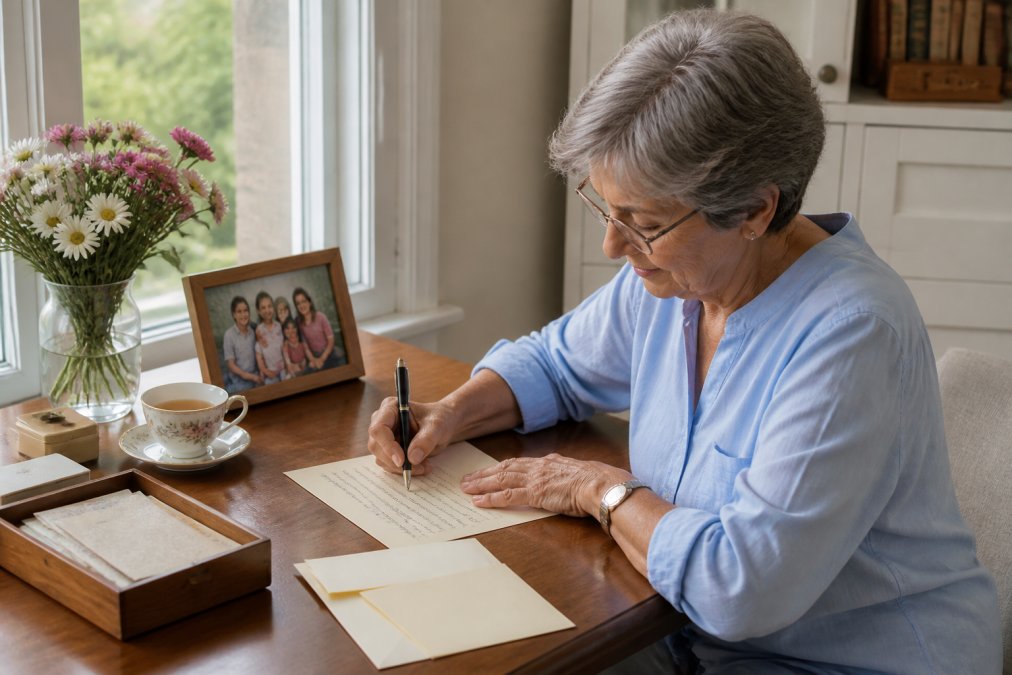
- Open with why you are writing and who it is for.
- Share two or three specific memories with sensory detail.
- Name the values you hope they carry forward.
- Close with a direct message to each reader.
Benefits of Guided Legacy Courses Over One-on-One Consulting
Guided legacy courses offer a structured approach similar to what a consultant provides, with the added benefit of working at your own pace. The core benefits of guided legacy courses come down to structure, privacy, and repeatability.
What a Guided Course Includes That a Consultant Meeting Doesn't
My Living Legacy Course is a compassionate, guided online program built around seven modules and more than 420 reflective prompts. It is designed as a companion to your will, so the legal side stays with your attorney while the personal side gets captured in one place.
Budget Breakdown: What Each Alternative Really Costs
Cost is where the alternatives separate most sharply, and it is also where most guides stay vague. Instead of quoting a single number, it helps to separate the costs into three buckets: cash outlay, time investment, and the cost of getting it wrong.
- Templates: No cash cost, high time cost, low completion rate. The hidden cost is the unfinished document.
- Legacy letter alone: No cash cost, but it covers only one piece of the puzzle and leaves final arrangements unaddressed.
- Guided course: One-time fee, moderate time cost, high completion rate. The fee buys structure, not information.
- Consultant: Highest cash cost, lowest time cost, most personalized. Best when the estate or family situation is genuinely complex.
- Hybrid (course plus attorney): Course fee plus legal fees, best overall coverage because the personal record and the legal documents stay separate and each is handled by the right professional.
The Cost of Doing Nothing
The most expensive option is usually the one nobody prices: an incomplete plan. When wishes are not written down, families default to the most traditional and most expensive arrangements, because that is what the funeral home or the court will recognize. A short, clear personal record costs far less than the decisions it prevents.
An unfinished free template costs you nothing and delivers nothing, and the gap it leaves gets filled by default choices you may not have wanted.
A Simple Way to Compare
Write down three numbers before you choose: what you can spend in cash, how many hours you will realistically give this over the next month, and how much a wrong default decision would cost your family. The option that fits all three is almost always the right one, regardless of which column it lands in.
Handling Family Pushback and Intergenerational Disagreements
Family pushback is normal, and it usually comes from discomfort rather than disagreement. Adult children may avoid the topic because it feels morbid, while parents may feel their wishes are being questioned. The gap most guides leave is the legal side: a conversation is not a plan, and a plan is not enforceable unless the paperwork exists.
Why the Conversation Alone Is Not Enough
A common pattern is a family that talks openly about non-traditional wishes, then discovers after a death that none of it was documented in a way anyone can act on. Two documents do most of the work here, and both are standard, low-cost, and widely available:
- Advance directives (a living will and a health care power of attorney) record medical preferences and name the person authorized to speak for you when you cannot. Every state has its own form, and hospitals, senior centers, and state attorney general offices typically provide free or low-cost versions.
- A durable power of attorney for finances names who can handle accounts, bills, and property if you become incapacitated. This is separate from a health care proxy and is often overlooked.
- A will or trust handles what happens to property after death. This is the attorney's domain, and it is the piece a legacy course or template deliberately does not touch.
Scripts That Lower the Temperature
Vague advice to "communicate openly" rarely helps. Specific openings do. A few that tend to work:
- Lead with your own plan, not theirs. "I've been writing down what I'd want, and I'd like to show you. I'm not asking you to decide anything today."
- Separate the story from the logistics. "Before we talk about arrangements, can I tell you about the summer I want you to remember?" Memories open the door to harder topics.
- Name the fear out loud. "I know this feels like talking about death. What I'm actually trying to do is save you from guessing."
- Give a specific, small ask. "Can you read this one page and tell me if anything is unclear?" A small ask is easier to accept than a full plan.
- Offer the traditional option as a choice, not a threat. "If a full service matters to you, I want to hear that. I'd like us to decide together rather than default."
When the Disagreement Is Real
Sometimes the pushback is not discomfort, it is a genuine values conflict, often between a parent who wants a simple, non-traditional arrangement and an adult child who wants a traditional service. In that case, the useful move is to separate what is legally yours to decide from what is a shared family event. Disposition and medical wishes belong to the person who documented them.
A common mistake is springing a finished plan on the family all at once. Sudden, detailed instructions can feel controlling. Introduce the plan gradually, invite questions, and keep the legal documents in a place your named decision-makers can actually find them.
The single highest-value step is not the conversation, it is making sure the person you named on your advance directive knows they are named, knows where the document is, and has agreed to the role. An unfound directive is the same as no directive.
Conclusion: Choosing the Right Path for Your Family
Choosing among alternatives to professional legacy consultants comes down to three questions: how much structure you need, how much you want to spend, and how much time you will realistically invest.
Frequently Asked Questions
Can I create a legacy plan without hiring a professional consultant?
Yes. Most families can build a workable legacy plan using free templates, a guided course, or a structured workbook. The main things a consultant adds are accountability and customization, both of which a guided legacy course with modules and reflective prompts can provide a structured approach for. Start with a simple outline of your story, your wishes, and your final arrangements, then fill in the gaps over time.
What is the difference between estate planning and legacy planning?
Estate planning covers the legal and financial side: wills, trusts, powers of attorney, and asset distribution. Legacy planning goes further and captures the personal side, including your life story, values, relationships, and non-legal wishes. A will tells your family what to do with your assets. A legacy plan tells them who you were and what mattered to you. The two work best as companions, not replacements.
How do legacy planning templates compare to a guided course?
Templates are free and flexible, but they leave you to figure out what to write and when. A guided course walks you through each section with prompts, so you are not staring at a blank page. If you already know exactly what you want to document and just need a format, templates work well. If you want structure and momentum, a course is usually the better fit.
What should be included in a comprehensive legacy document?
A complete legacy document typically covers your personal history, key relationships, values you want passed down, letters to specific family members, instructions for your memorial or celebration of life, and any non-legal wishes about your belongings. It should also note where your legal documents are stored and who to contact. Keep it separate from your will but tell your family both exist.
Is it better to use a guided course or a private consultant for legacy planning?
It depends on your budget and how much hand-holding you want. A private consultant offers one-on-one attention and often focuses on financial or business succession. A guided course gives you structure, prompts, and lifetime access at a one-time fee, which suits most families documenting personal stories and final wishes. Many people start with a course and only hire a consultant for complex financial situations.