 listicle
Benefits of Guided Legacy Planning: What Changes
Table of Contents
- Why Guided Legacy Planning Matters More Than a Will
- Legacy Planning vs Estate Planning: What Each One Covers
- The Emotional Benefit: Reducing Your Family's Burden
- Passing Down Values, Not Just Assets
- How to Discuss End of Life Wishes With Your Loved Ones
- Your Guided Legacy Planning Checklist for Getting Started
- Start Your Legacy Today
- Frequently Asked Questions
Last Updated: September 7, 2026
Most families assume a last will and testament is enough. Yet the benefits of guided legacy planning extend far beyond property distribution, touching the emotional and personal history that legal paperwork cannot capture. Guided legacy planning is the process of intentionally documenting your life story, core values, and final wishes with a structured framework. My Living Legacy Course is designed to help you thoughtfully organize and pass down your unique life story, personal wishes, and final arrangements to your loved ones.
Why Guided Legacy Planning Matters More Than a Will
A will tells your family what they receive. Guided legacy planning tells them who you were and what you believed. When a loved one passes, families scramble to locate passwords and sentimental items, guessing at funeral preferences. A guided process captures your instructions while you can still express them clearly, the emotional inheritance that outlasts any financial one.
Legacy Planning vs Estate Planning: What Each One Covers
Estate planning and legacy planning are complementary but distinct. Estate planning is the legal and financial architecture determining who receives your property, who makes medical decisions if you become incapacitated, and how assets transfer with minimal tax exposure. Legacy planning is the human architecture: the stories, values, and instructions that help your family understand why you left what you did and who you were.
Estate Planning: The Legal Framework
A comprehensive estate plan typically includes several documents, each serving a specific function:
- Last Will and Testament: Names your executor, specifies who receives your probate assets, and names guardians for minor children. Without a will, state intestacy laws determine distribution, which often contradicts family expectations (americanbar.org).
- Revocable Living Trust: Allows assets to bypass probate, which in many states takes 6 to 18 months and costs 3% to 7% of the estate value in court fees and attorney costs. A trust keeps the process private and gives you control over how and when heirs receive distributions.
- Durable Power of Attorney: Authorizes someone to manage your finances if you become incapacitated. This is critical because a will only takes effect after death.
- Healthcare Proxy and Living Will: Designate who makes medical decisions and document your preferences for life-sustaining treatment. These documents prevent family members from having to make agonizing guesses during a crisis.
- Beneficiary Designations: Life insurance policies, retirement accounts (401(k)s, IRAs), and payable-on-death accounts transfer outside of probate. These designations override your will, so keeping them current is essential.
Tax-Smart Wealth Transfer: The Financial Mechanism
For estates above the federal exemption threshold, $13.61 million per individual in 2024, federal estate tax becomes a real concern (irs.gov). But even for estates well below that figure, income tax basis planning matters. When heirs inherit assets, they receive a step-up in basis to the asset's value on your date of death. This means if you bought a home for $200,000 and it is worth $600,000 when you pass, your heirs can sell it without capital gains tax on the $400,000 appreciation. Proper estate planning ensures this step-up is preserved.
Annual gift exclusion is another lever. In 2024, you can gift up to $18,000 per person per year without triggering gift tax or using your lifetime exemption (irs.gov). A married couple can gift $36,000 per recipient annually. Funding a 529 college savings plan allows a five-year election, effectively front-loading five years of gifts in one year, up to $90,000 per beneficiary per individual.
Charitable strategies add another layer. A charitable remainder trust (CRT) lets you donate appreciated assets, avoid capital gains tax, receive an income stream for life, and claim a charitable deduction. A donor-advised fund (DAF) offers immediate tax deduction while allowing you to recommend grants to charities over time. These tools convert tax liability into philanthropic impact.
Legacy Planning: The Human Framework
Legacy planning operates alongside these legal documents but answers questions no attorney will ask: What were your defining moments? What lessons do you want your grandchildren to carry? Why did you leave a specific asset to one child and not another? A guided legacy planning process captures these answers through structured reflection, documenting your history, values, and practical instructions for moments legal documents cannot reach, the eulogy, the memorial playlist, the stories behind heirlooms.
How They Work Together
Your estate plan provides the legal vehicle; your legacy plan provides the driver's manual. Consider leaving your vacation home to three children as tenants in common. Legally straightforward, but without a legacy document explaining your hope that they continue gathering there each summer, siblings may sell the property within a year over maintenance costs. The legal document created ownership; the legacy document preserved intent. Both should be treated as ongoing processes, reviewed after major life events, neither is a one-time event.
The Emotional Benefit: Reducing Your Family's Burden
The administrative chaos following a death is overwhelming. Adult children suddenly become estate executors, funeral planners, and household liquidators, and the psychological impact of making these decisions without guidance can linger for years.
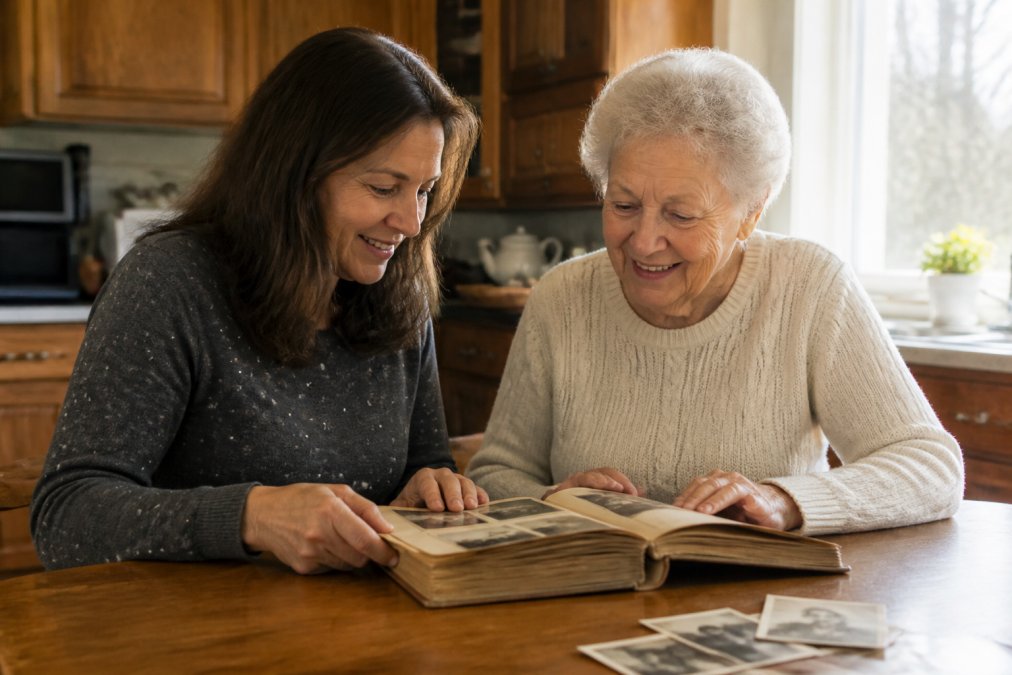
Documenting your wishes in advance is an act of compassion. When your family knows your preferences for memorial services, personal items, and care decisions, they grieve without the added weight of guesswork. This clarity is a significant benefit of guided legacy planning for those you leave behind.
A common mistake is assuming your children will "figure it out." In practice, siblings often disagree about what mom or dad would have wanted. Written guidance prevents these conflicts before they begin.
Passing Down Values, Not Just Assets
Financial stewardship is important, but family heritage carries a different weight. Your core values, traditions, and philosophies shape future generations in ways bank accounts cannot. Consider the difference between leaving your grandchild money for college and leaving them a written account of the hardships you overcame to afford your own education. The first provides opportunity; the second provides perspective and resilience. Guided legacy planning encourages this reflection through structured questioning, drawing out the stories and lessons your family will treasure. For non-traditional families, blended families, chosen family structures, close friends who function as relatives, this process carries particular importance, as legal templates rarely accommodate their arrangements.
How to Discuss End of Life Wishes With Your Loved Ones
Talking about death with your children is uncomfortable, so most families avoid it, assuming there will be time later. The challenge is that "later" arrives without warning. Start small with a single question about a specific topic, such as where you would like to spend your final days or what type of memorial service feels right. A practical approach is to use your written legacy document as the conversation starter. Saying "I have been organizing my thoughts and I would like to share them with you" shifts the focus from abstract death to a concrete review of your wishes. Framing the discussion around the gift of clarity rather than the reality of loss changes the emotional register entirely.
Your Guided Legacy Planning Checklist for Getting Started
Beginning this process requires intention and a willingness to reflect, not technical expertise or legal training. Here is a practical checklist for your first steps:
- Gather your existing documents. Collect your will, insurance policies, and any advance directives you have completed.
- Identify your key stories. List five memories or life lessons you want future generations to know.
- Document practical wishes. Write down preferences for memorial services, burial or cremation, and care decisions.
- List your digital assets. Include passwords, social media accounts, and online financial accounts with instructions for access.
- Record family history. Note important dates, traditions, and the origins of family customs.
- Schedule a family conversation. Set a specific time to share your intentions and answer questions.
- Review and update annually. Legacy planning is not a one-time event. Revisit your documents each year.
The Digital Legacy Gap: What Most Plans Miss
A guided structure makes this checklist manageable. Rather than confronting an overwhelming project, you work through one module at a time. But one area where nearly every family plan falls short is digital assets. The average American holds over 100 online accounts, from banking to social media to cloud storage. When you pass, your family faces a digital maze with no map.
Practical Mechanisms for Digital Asset Access
Password managers. A tool like 1Password, Bitwarden, or Dashlane stores all your credentials in one encrypted vault. Most offer an emergency access feature granting a designated person entry after a waiting period or upon your death, the single most effective step you can take.
Platform-specific policies. Each major platform has its own rules for deceased users:
- Facebook: You can designate a Legacy Contact who can manage your profile after death, pin a tribute post, or request account memorialization. Without this designation, family members must provide a death certificate and proof of relationship to request account removal.
- Google: The Inactive Account Manager lets you decide what happens to your Gmail, Drive, and Photos after a period of inactivity. You choose who gets access and what data they receive.
- Apple: Legacy Contact access allows designated individuals to access your iCloud data, including photos, notes, and files, after verification.
- Microsoft: You can add a person to access your account after a period of inactivity, though the process requires more manual setup.
Financial accounts. Most banks and brokerages require a death certificate and court-issued letters before releasing funds. However, you can add a payable-on-death (POD) or transfer-on-death (TOD) designation to individual accounts, allowing them to pass directly to beneficiaries without probate. Retirement accounts require a beneficiary designation form, without one, assets may be forced through probate.
Digital memories. Photos stored only on your phone or in cloud services without shared access may be lost forever. Consider creating a shared family album on Google Photos or iCloud Shared Library, or periodically printing physical copies.
The Non-Traditional Family Consideration
Standard legal templates assume a married couple with biological children, but modern families take many forms: blended families, unmarried partners, same-sex couples, chosen family members. For these families, digital access and legacy instructions become even more critical because legal default rules rarely recognize these relationships. If you are unmarried, your partner has no automatic right to access your accounts, medical information, or digital life. A healthcare proxy, durable power of attorney, and explicit beneficiary designations are essential. Your legacy document should name the people who matter to you, regardless of legal relationship.
A Deeper Digital Checklist
Expand your basic checklist with these digital-specific steps:
- Inventory every account. List email, banking, investment, social media, cloud storage, subscription, and utility accounts.
- Set up a password manager. Choose one, store all credentials, and designate an emergency contact.
- Configure platform legacy tools. Set up Facebook Legacy Contact, Google Inactive Account Manager, and Apple Legacy Contact.
- Document two-factor authentication recovery codes. Without these, your family may be locked out permanently.
- Identify digital assets of sentimental value. Photos, videos, journals, and correspondence deserve explicit preservation instructions.
- Name a digital executor. This person should have the technical literacy and trust to manage your online presence after death.
- Include cryptocurrency instructions. If you hold Bitcoin or other digital assets, document wallet locations, private keys, and recovery phrases in a secure manner your family can access.
A guided legacy planning process that addresses these digital dimensions ensures your family inherits not just financial assets but memories, online identity, and stories stored in pixels and servers. This is the modern inheritance, and it requires modern planning.
Start Your Legacy Today
The most difficult part of legacy planning is simply beginning. The task feels enormous, and the emotional weight of confronting your own mortality can be paralyzing. But the benefits of guided legacy planning become real only when you take that first step.
My Living Legacy Course offers a structured path through this process. With seven guided modules and over 420 reflective prompts, the course walks you through organizing your story, wishes, and final arrangements at your own pace. It is designed as a companion to your will, providing the emotional and personal clarity that legal documents cannot offer. The one-time fee includes lifetime access, so you can update your legacy as your life evolves.
The gift you give your family is not a document. It is the absence of guesswork during their most vulnerable moments. It is the story of your life told in your own voice, preserved exactly as you want it remembered.
Frequently Asked Questions
What is the difference between estate planning and guided legacy planning?
Estate planning is the legal process of arranging how your assets will be transferred after death, involving wills, trusts, and beneficiary designations. Guided legacy planning is a broader, more personal process. It captures your life story, values, and final wishes for your family. While a lawyer handles the legal documentation, a guided legacy plan ensures your family understands the reasoning behind your decisions and knows your personal wishes, providing emotional clarity that legal documents alone cannot offer.
How does guided legacy planning help reduce the emotional burden on my family?
After a loss, families often struggle with difficult decisions and unanswered questions. A guided legacy plan provides clear answers about your final arrangements and personal wishes. This preparation reduces guesswork, prevents conflicts among siblings, and offers comfort during a painful time. Knowing your wishes on topics you might not have discussed, from sentimental item distribution to digital accounts, gives your family the confidence to honor your memory without added stress.
Does guided legacy planning require a legal professional?
Guided legacy planning does not replace the need for a lawyer to create legal documents like a will or trust. However, it does not require a legal professional to complete. A guided course provides the structure and prompts you need to document your stories, values, and personal wishes. It acts as a companion to your legal estate plan, filling in the emotional and personal gaps that legal documents do not cover.
What should be included in a comprehensive legacy plan?
A comprehensive legacy plan goes beyond your will. It includes your life story, core values, and messages to loved ones. It also documents practical final wishes, such as funeral preferences, and the location of important documents. A good plan covers digital assets, including passwords and social media accounts. Using a guided approach, like a course with reflective prompts, helps ensure you don't miss these critical details that offer your family clarity and comfort.
Get started with My Living Legacy Course and give your family the clarity and comfort they deserve, today and for generations to come.