 ultimate-guide
Benefits of Guided Legacy Courses: A 2026 Guide
Table of Contents
- What Guided Legacy Courses Actually Do
- How Guided Legacy Courses Differ From DIY Journaling
- Seven Key Benefits of Structured Legacy Planning
- 1. Clarity for Your Loved Ones During Difficult Times
- 2. Intergenerational Wealth Transfer Beyond Money
- 3. Values-Based Decision Making for Your Family
- 4. Psychological Benefits of Legacy Work
- 5. Organization of Digital Assets and Final Wishes
- 6. Companion to Your Legal Will and Estate Plan
- 7. Enduring Impact Across Future Generations
- Best Legacy Planning Courses: What to Look For
- Legacy Planning Templates and Curriculum Evaluation
- Legacy Project Examples: Real Stories of Impact
- Legacy Coaching Benefits and Ongoing Support
- Is a Guided Legacy Course Right for You?
- Frequently Asked Questions
Last Updated: August 9, 2026
What Guided Legacy Courses Actually Do
A guided legacy course is a structured, self-paced program designed to help you organize and communicate your life story, personal values, and final wishes to your loved ones. Unlike generic journaling or informal conversations, these courses provide a framework, typically through modules and reflective prompts, that ensures nothing important gets overlooked.
My Living Legacy Course, for example, walks you through seven comprehensive modules with over 420 reflective prompts. The goal isn't to create a literary masterpiece. It's to capture what matters: your memories, your instructions, your values, and the practical details your family will need during difficult times.
Think of it as a structured conversation with yourself on paper, one that your children, grandchildren, or closest loved ones can reference for years to come. The course acts as a companion to your legal will, filling in the emotional and practical gaps that legal documents simply cannot address.
How Guided Legacy Courses Differ From DIY Journaling
Writing in a blank journal sounds simple until you actually face the blank page. What do you include? Where do you start? How do you organize decades of memories into something your family can actually use?
A guided legacy course removes that paralysis. Instead of staring at an empty page, you answer specific prompts designed to draw out the stories, decisions, and wisdom you want to pass down. One prompt might ask about your proudest achievement. Another might guide you through your financial wishes or digital asset locations. A third might explore the values you hope your family will carry forward.
The structure matters more than you'd think. When people journal freely, they often skip the practical details, the passwords, the insurance policies, the location of important documents, because those feel less poetic than storytelling. A guided course integrates both. It asks you to reflect on your life journey and simultaneously captures the logistics your family actually needs.
Research from estate planning professionals shows that families who have access to both a will and a comprehensive legacy document experience significantly less confusion and conflict during probate and after. The guided course bridges that gap by creating clarity beyond legal language.
Seven Key Benefits of Structured Legacy Planning

1. Clarity for Your Loved Ones During Difficult Times
When a parent or grandparent passes, the family faces immediate decisions while grieving. A guided legacy course provides a roadmap. Your loved ones know your wishes, not just about money or property, but about how you want to be remembered, what matters most to you, and how you'd want them to move forward.
This clarity reduces conflict. When adult children have access to your documented values and preferences, there's less room for disagreement about what you would have wanted. It also reduces the administrative chaos. Instead of searching for passwords or wondering where important documents are stored, your family has a single resource that tells them what they need to know.
2. Intergenerational Wealth Transfer Beyond Money
Wealth transfer isn't only about financial assets. The most meaningful legacies are often intergenerational knowledge, values, and life lessons. A guided legacy course captures these elements deliberately.
You can document the principles that guided your financial decisions, the mistakes you learned from, and the wisdom you've accumulated over decades. Your grandchildren might never know you personally, but through a guided course, they can understand how you thought, what you valued, and why you made the choices you did. This creates a form of wealth, intellectual and emotional, that transcends money.
3. Values-Based Decision Making for Your Family
Many families drift from their founding values across generations. A guided legacy course anchors those values in writing. When you articulate what matters most, integrity, generosity, family loyalty, education, community service, you create a reference point for future generations.
Your children and grandchildren can return to these documented values when facing their own decisions. Should they prioritize career advancement or family time? How should they approach charitable giving? What does financial stewardship mean in your family? These questions become easier to answer when you've already provided your perspective.
4. Psychological Benefits of Legacy Work
The process of creating a legacy, reflecting on your life, identifying your values, and documenting your story, carries psychological benefits for you, not just your family. Many people report feeling a sense of completion and peace after working through a structured legacy course.
This reflective process can reduce anxiety about mortality. By actively shaping how you'll be remembered and ensuring your loved ones have what they need, you regain a sense of control. You're not passively waiting for the end; you're actively preparing. That shift from passivity to agency often brings genuine comfort.
5. Organization of Digital Assets and Final Wishes
Most people have digital assets they've never formally inventoried: email accounts, social media profiles, photos stored in the cloud, cryptocurrency, online banking, subscription services. A guided legacy course walks you through identifying these assets and documenting how your family should handle them.
Beyond digital assets, a structured course ensures you've thought through your final wishes, funeral preferences, organ donation, end-of-life medical decisions, and documented them clearly. Your family won't have to guess or argue about what you would have wanted.
6. Companion to Your Legal Will and Estate Plan
Your will handles the legal and financial distribution of your estate. It's essential, but it's not sufficient. A will tells your family what they're inheriting. A guided legacy course tells them why it matters and provides context about your life and values.
Many people who've already completed a legal will discover they still have questions: What personal stories should I preserve? How do I explain my values to my children? What practical instructions does my family need beyond what's in the will? A guided legacy course answers these questions, complementing rather than replacing your legal documents.
7. Enduring Impact Across Future Generations
A guided legacy course creates a document that can be revisited for decades. Your great-grandchildren might read it and understand their family history. Your grandchildren might return to it when facing major life decisions. The impact extends far beyond the immediate family and far beyond your lifetime.
This enduring quality transforms the course from a practical tool into a form of immortality, not in a grandiose sense, but in the genuine way that your values, stories, and wisdom continue to influence the people you love.
Best Legacy Planning Courses: What to Look For
When evaluating guided legacy courses, consider these criteria:
Comprehensiveness of modules. Does the course cover all the areas that matter to you, personal stories, financial wishes, digital assets, family values, end-of-life preferences? A well-designed course should address both the emotional and practical dimensions of legacy planning.
Quality of prompts. The prompts are the heart of the course. Are they thoughtfully written to draw out meaningful reflection, or do they feel generic? Good prompts should guide without dictating. They should help you think more deeply about your life and values.
Lifetime access and portability. Once you've invested time in creating your legacy, you want to know it's secure and accessible. Look for courses that offer lifetime access (not subscription-based) and provide options for how your family can access the content after you're gone.
User experience for less tech-savvy participants. If you're not comfortable with technology, can you still navigate the course? Is there phone support? Can you print materials? The best courses work for people across the technology spectrum.
Integration with other tools. Does the course integrate with legal documents, financial planning tools, or family communication platforms? Or do you have to manage everything separately?
Privacy and security. Where is your personal information stored? Who has access? What happens to your data after you pass away? These questions matter deeply.
My Living Legacy Course addresses these criteria through its seven guided modules, 420+ reflective prompts, lifetime access model, and companion positioning to your existing will and estate plan. The course is designed for people who want structure without overwhelming complexity.
Legacy Planning Templates and Curriculum Evaluation
When you're choosing a guided legacy course, ask for sample templates or module outlines. This shows you exactly what you'll be working through and helps you assess whether the curriculum matches your needs.
A strong curriculum typically includes:
- Personal history modules covering childhood, formative experiences, career, relationships, and major life decisions
- Values clarification sections that help you articulate what matters most and why
- Financial and practical planning including asset inventory, passwords, insurance information, and financial wishes
- Family communication guidance on how to discuss your legacy with your loved ones
- Digital asset documentation covering online accounts, social media, photos, and other digital property
- End-of-life preferences regarding medical decisions, funeral wishes, and burial or cremation preferences
- Letter-writing prompts for specific people in your life, letters you want them to read after you're gone
Look for courses that offer flexibility. You shouldn't feel pressured to answer every prompt if it doesn't apply to your situation. The best courses let you customize the experience to your life.
Legacy Project Examples: Real Stories of Impact
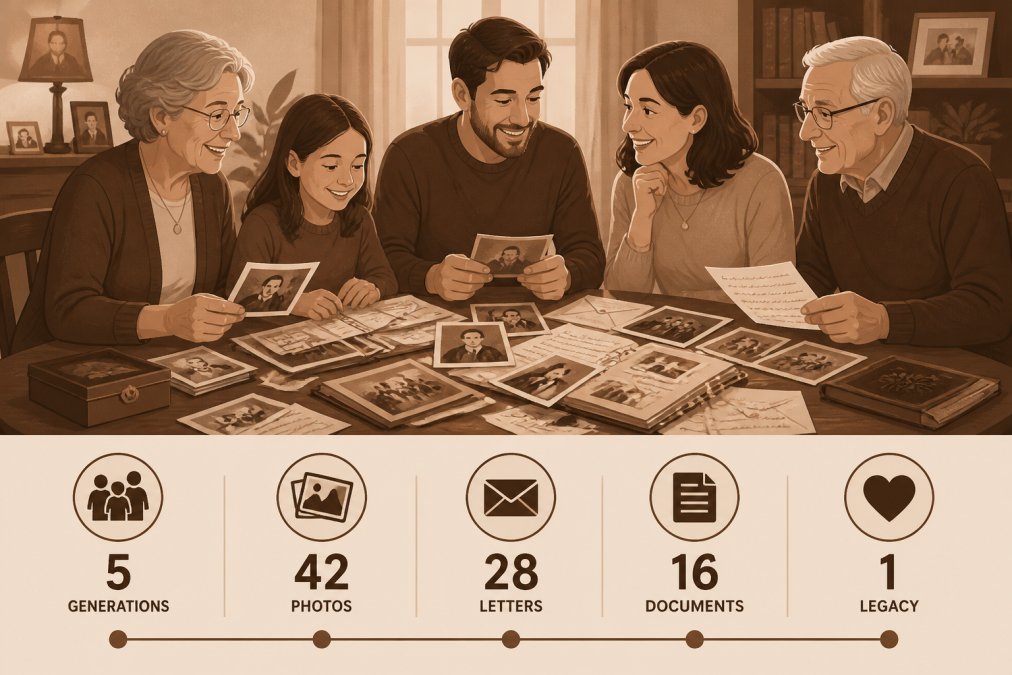
Real impact shows up in specific stories. A daughter discovers her father's handwritten reflections on raising children and finds comfort in understanding his perspective during a difficult parenting moment. Adult siblings use their mother's documented values to resolve a disagreement about how to distribute family heirlooms, not by monetary value, but by what aligned with what she actually cared about.
A granddaughter reads her grandmother's legacy course and learns stories about relatives she never met, understanding where her family came from and what shaped her own values. A son finds his father's documented wishes about end-of-life care and funeral preferences, knowing exactly how to honor his father's choices during a time of grief.
These aren't dramatic transformations. They're the quiet, profound impact of clarity, connection, and being truly heard across time.
Legacy Coaching Benefits and Ongoing Support
Some legacy planning courses include coaching or support components. These can range from email support to group sessions with others working on their legacy projects.
The benefit of coaching is accountability and personalized guidance. When you're stuck on a difficult prompt, maybe you're struggling to articulate your values or you're uncertain how to approach a sensitive family topic, a coach can help you work through it. Some people find that talking through their legacy with another person deepens the reflection and produces richer, more authentic content.
Group sessions can also reduce the sense of isolation that sometimes accompanies this work. Discovering that others are wrestling with similar questions, how to talk to adult children about money, how to preserve family stories, how to ensure their values are understood, can be comforting and motivating.
Is a Guided Legacy Course Right for You?
Not everyone needs a guided legacy course. If you've already documented your values, stories, and wishes in another format and your family knows how to access and understand that documentation, you may not need one.
But if you're in one of these situations, a guided legacy course is likely worth considering:
You've completed a legal will but sense something important is missing. You want your family to understand not just what they're inheriting, but why it matters and what you hope they'll do with it.
You want to preserve family stories and wisdom for future generations, but you're not sure how to organize that information in a way your family can actually use.
You're concerned about digital assets, passwords, and practical end-of-life details, and you want a single place where your family can find everything they need.
You value the psychological benefit of actively preparing, of taking control of your legacy rather than passively leaving it to chance or your family's interpretation.
You're not particularly tech-savvy, but you want a structured, guided approach that doesn't require you to figure everything out on your own.
You want to communicate your values to your children or grandchildren in a way that goes deeper than casual conversation.
Creating a legacy is one of the most meaningful things you can do for the people you love. It's not about being wealthy or famous. It's about ensuring your voice, your values, and your wisdom continue to matter after you're gone. My Living Legacy Course provides the structure and guidance to make that happen, with lifetime access, 420+ thoughtful prompts, and a companion approach to your legal will that ensures your family has both the practical information and the emotional context they need. Start your legacy today, and give your loved ones the gift of clarity and connection.
Frequently Asked Questions
How do guided legacy courses differ from DIY journaling or just writing things down myself?
Guided legacy courses provide structured prompts, organized modules, and a clear framework that ensures you capture all the important details your family needs. DIY journaling often leads to incomplete information, scattered thoughts, and gaps in coverage. A guided legacy course walks you through estate planning considerations, digital asset organization, and financial stewardship systematically, while also offering lifetime access and the ability to revisit and update your information as life changes.
What are the main benefits of legacy planning for my family after I'm gone?
Guided legacy planning provides your loved ones with clarity during an emotionally difficult time, reduces administrative chaos, and communicates your values and wishes beyond what a legal will covers. It protects them from making decisions without understanding your intentions, helps with intergenerational wealth transfer of both financial and non-financial assets, and ensures your personal stories and life lessons are preserved. This creates enduring impact and helps future generations understand their family history and values.
I'm not tech-savvy, will I be able to complete an online legacy course?
Most guided legacy courses are designed for older adults with varying comfort levels with technology. They typically feature simple navigation, large text options, and straightforward interfaces. You work at your own pace, can save progress, and revisit sections anytime. Many courses include customer support for technical questions. The reflective prompts are the focus, not complex software skills, so if you can use email or browse websites, you can navigate a well-designed legacy course.
How does a guided legacy course complement my existing will or estate plan?
Your will is a legal document that distributes assets; a guided legacy course is a companion tool that communicates your personal story, final wishes, values, and non-legal arrangements. Together, they create a complete picture for your family. The course helps you organize information about digital assets, final arrangements, family history, and instructions that a legal will cannot address. This combination ensures your loved ones have both legal clarity and personal understanding of who you were and what mattered to you.