 how-to
Creating a Meaningful Family Legacy: A 2026 Guide
Table of Contents
- What Does a Meaningful Family Legacy Actually Mean
- Defining Your Core Values and Family Mission Statement
- Family Legacy Statement Examples and How to Write Yours
- How to Discuss End of Life With Family: Starting the Conversation
- Building Family Traditions and Rituals That Last
- Your Legacy Planning Checklist: From Story to Succession
- Transmitting Values to the Next Generation Through Digital Legacy
- Conclusion: Your Family Legacy Starts Today
- Frequently Asked Questions
Last Updated: August 19, 2026
What Does a Meaningful Family Legacy Actually Mean
A meaningful family legacy is the enduring impact you create through your values, stories, memories, and guidance that shapes how your family thinks, acts, and treats one another for generations to come. It extends far beyond financial inheritance, it's the emotional, moral, and relational foundation you leave behind.
Most people confuse legacy with estate planning, assuming it means money or possessions. That's part of it, but the deeper legacy is what your children and grandchildren carry forward in their hearts and minds: the dinner table conversations they remember, the principles they live by, the way they handle conflict because they watched you handle it.
A will tells people what they inherit. A legacy tells them why it matters and who you were. Creating this kind of legacy requires intentionality, articulating what you believe matters most, documenting not just what you own but who you are, and having conversations about difficult topics most people avoid.
My Living Legacy Course bridges this gap by guiding you through the reflective work of articulating your story and values in a structured way, then helping you communicate that legacy to your family with clarity and compassion. It's a companion to your will, not a replacement.
Defining Your Core Values and Family Mission Statement
Your core values are the bedrock of everything you pass down. They're the non-negotiable beliefs that guide how you make decisions, treat people, and move through the world.
Start by asking: What do I actually believe in? Not what you think you should believe, but what has genuinely shaped your life? Common values include integrity, generosity, resilience, education, family connection, faith, hard work, creativity, or service. Identify which ones are truly yours by reflecting on moments when you felt most proud or most disappointed, what values were at stake?
Once you've identified your core values, a family mission statement articulates how those values translate into action. It's a short statement, a few sentences, that captures what your family stands for and how you want to be remembered. Instead of abstract language like "We value kindness," write something specific and actionable: "We show up for each other in hard times, even when it's inconvenient. We speak honestly and listen without judgment. We believe in second chances."
The process of writing this statement forces clarity and reveals gaps in your thinking. That's valuable work.
Family Legacy Statement Examples and How to Write Yours
A family legacy statement is more personal and narrative than a mission statement. It tells the story of who you are, what shaped you, and what you want your family to know about you and carry forward.
Example 1: The Values-Focused Legacy "I grew up with very little. My parents worked two jobs each to keep us housed and fed. That taught me that security comes from hard work, not luck. I want my children to know this about me: I'm not afraid of work. But I also learned that work isn't everything. Make sure you know the difference. Build a life you actually want to live, not just one that looks successful from the outside."
Example 2: The Story-Centered Legacy "Your grandmother came to this country with two suitcases and no English. She cleaned houses for twenty years so we could go to college. Every time I wanted to quit something hard, I thought about her. I want you to know her story because it's your story too. You come from people who didn't give up."
Example 3: The Relationship-Focused Legacy "The most important thing I've learned is that relationships matter more than being right. I've made mistakes as a parent and said things I regret. But I've also learned to apologize, listen, and repair what I've broken. Family isn't about perfection. It's about showing up, being honest, and choosing each other even when it's hard."
How to write yours:
Answer these questions without editing yourself: What are the 3-5 most important lessons you've learned? What are you most proud of? What do you want your children to know about you that they might not already? What values do you hope they carry forward? What stories define who you are?
Write freely, then organize into a coherent statement of 300-500 words. Mix personal narrative with explicit values. Be honest about struggles, not just achievements.
How to Discuss End of Life With Family: Starting the Conversation
Most families avoid this conversation until it's too late. Someone gets sick, decisions need to be made, and suddenly everyone is arguing about what the person would have wanted because nobody actually asked.
The best time to start is now, when things are stable and everyone can think clearly without panic.

Name the conversation explicitly. Say: "I'd like to talk with you about some important things related to my future. I want you to understand my wishes and what matters to me."
Start with your values, not logistics. Lead with "Here's what I believe about quality of life" rather than "If I'm in a coma, do you pull the plug?" Values-based conversation is easier because it's about understanding.
Be specific about your wishes. Instead of "I don't want to be kept alive artificially," say "If I have advanced dementia and can no longer recognize you or feed myself, I don't want to pursue aggressive medical treatment."
Explain your reasoning. Help your family understand why you feel this way so they can honor your wishes even in situations you didn't specifically anticipate.
Listen to their fears. This conversation goes both directions. Make space for your family's concerns about guilt, burden, and their own values.
Document it in writing. After the conversation, write a letter to your family explaining your values and wishes in your own words. This serves as both clarity and comfort when the time comes.
Revisit periodically. Your wishes may change as you age. Every few years, revisit the conversation and update your documentation.
The families who handle end-of-life crises most gracefully are the ones who had this conversation when nobody was in crisis.
Building Family Traditions and Rituals That Last
Traditions are how values get transmitted from one generation to the next. They're the mechanism by which family identity actually persists.
A tradition doesn't have to be elaborate or expensive. It just has to be intentional and repeated. It creates a moment where your family is together and present, away from ordinary chaos.
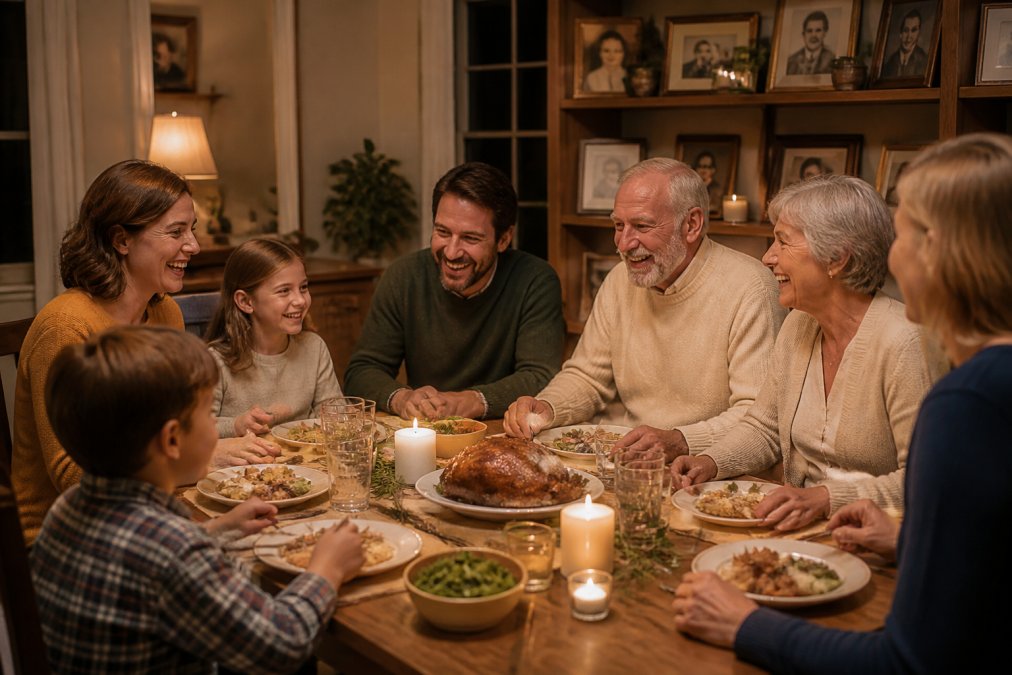
Some families have holiday traditions, weekly rituals like Sunday dinner, or annual gatherings. The power of these traditions is consistency, your family knows that on this day, in this way, you'll all be together.
Traditions also encode values. A Sunday dinner where everyone puts phones away teaches that connection matters more than distraction. Volunteering together teaches that service is part of who you are. Telling family stories teaches that your past informs your present.
The most resilient traditions have built-in flexibility. A core element stays the same, but they adapt as circumstances change. A family might gather for Thanksgiving in different locations with different menus, but the gathering happens.
Some traditions you create intentionally. Others emerge organically and become "just what your family does." The work is to notice which ones matter and protect them. In busy seasons, traditions are often the first thing to drop, but that's exactly when they matter most.
Your Legacy Planning Checklist: From Story to Succession
Creating a meaningful family legacy requires moving from reflection to action:
Phase 1: Clarify Your Story and Values (Weeks 1-4)
- Identify your core values
- Write your family mission statement
- Document your personal history
- Articulate your life lessons
- Identify key stories that define who you are
Phase 2: Have the Difficult Conversations (Weeks 5-8)
- Schedule conversations with adult children about your values and wishes
- Discuss your end-of-life preferences and reasoning
- Address financial expectations and inheritances
- Clarify roles and responsibilities
- Listen to their concerns
Phase 3: Document Your Wishes and Instructions (Weeks 9-12)
- Create or update your legal will with an attorney
- Write a family letter explaining your values and wishes
- Document practical information (passwords, accounts, insurance)
- Create a contact list and instructions for what to do if something happens
- Organize important documents in an accessible location
Phase 4: Establish and Protect Family Traditions (Ongoing)
- Identify which traditions matter most
- Schedule them into your calendar
- Invite family members to participate in maintaining them
- Document why these traditions matter
Phase 5: Create a Digital Legacy Plan (Weeks 13-16)
- List all digital accounts and access information
- Decide what happens to social media, email, and digital photos
- Create a digital legacy instruction document
- Share access information securely with a trusted person
My Living Legacy Course guides you through each phase with structured prompts and reflection exercises. Rather than facing a blank page, you're guided through questions designed to surface what actually matters.
Transmitting Values to the Next Generation Through Digital Legacy
Your digital legacy is increasingly important. Your children will inherit not just physical possessions and memories, but your digital presence.
Digital legacy includes your digital story (photos, videos, emails, social media posts), digital instructions (passwords and account information), and digital values (how you want to be remembered online). One of the most important ways you transmit values is by modeling how you use technology, whether you put your phone away at dinner, engage thoughtfully on social media, and consume information critically.
Document your digital wishes. Make it clear what you want to happen to your accounts and digital presence. This is an act of care, you're sparing your family from having to guess.
Conclusion: Your Family Legacy Starts Today
Creating a meaningful family legacy isn't something you do at the end of your life. It's something you do throughout your life, and it intensifies when you get intentional about it.
The families that feel most connected across generations are the ones that have done this work. They know what their ancestors valued. They understand their family story. They have rituals that bind them together. They've had hard conversations about money, values, and mortality, so when crisis comes, they're not paralyzed by confusion.
The barrier isn't knowing what to do. It's actually doing it. Most people understand intellectually that this work matters but haven't sat down to do it because it feels heavy.
My Living Legacy Course removes that friction by providing structure, prompts, and guidance to move from knowing this matters to actually creating your legacy. Through seven comprehensive modules and over 420 reflective prompts, you work through your story, values, wishes, and instructions at your own pace.
Your family legacy starts today, with one decision: to be intentional about what you pass down.
The clarity your family needs after you're gone starts with the clarity you create today. My Living Legacy Course helps you organize your story, document your wishes, and communicate your values in a way that truly informs and comforts those you cherish. With lifetime access and over 420 guided prompts, you can work at your own pace to create a legacy that goes far beyond a will, one that shapes how your family thinks, acts, and remembers you for generations to come.
| Phase | Focus | Duration |
|---|---|---|
| Clarify Your Story | Values, history, lessons | 4 weeks |
| Have Conversations | Discuss wishes and expectations | 4 weeks |
| Document Everything | Legal, financial, practical | 4 weeks |
| Protect Traditions | Identify and schedule family rituals | Ongoing |
| Create Digital Plan | Accounts, passwords, digital wishes | 4 weeks |
EXTERNAL SOURCES & FURTHER READING:
According to research on family communication from the American Psychological Association, families that engage in regular, honest conversations about values and expectations experience stronger intergenerational bonds and lower conflict during times of crisis.
The National Hospice and Palliative Care Organization emphasizes that advance care planning conversations, when conducted proactively, significantly reduce family stress and ensure that end-of-life care aligns with the patient's actual values and wishes.
The Journal of Financial Planning has documented that families who combine legal estate planning with legacy communication, sharing values, stories, and non-legal wishes, experience better long-term family cohesion and lower rates of conflict over inheritance.
Frequently Asked Questions
What's the difference between a will and a family legacy plan?
A will is a legal document that specifies who inherits your assets and property. A family legacy plan goes deeper, it captures your personal stories, core values, family traditions, and the reasoning behind your wishes. It explains the 'why' behind your decisions and helps your family understand your life philosophy. Think of a will as the legal framework and a legacy plan as the emotional and practical guide that helps your loved ones navigate life after you're gone with clarity and comfort.
How do I create a family legacy statement that my children will actually read?
Keep it personal and specific. Rather than writing abstract principles, share real stories from your life that shaped who you are. For example, instead of 'value hard work,' write about the time you worked three jobs to support your family and what that taught you. Use concrete examples, mention people by name, and explain how your values apply to everyday decisions. Break it into short sections so it feels manageable. The more authentic and story-driven your legacy statement, the more likely your family will engage with it and remember it.
What should I include in a legacy planning checklist?
Your checklist should cover: your life story and key milestones, core values and family mission statement, important relationships and why they mattered, financial and legal information (account locations, passwords, executor details), end-of-life preferences and funeral wishes, family traditions you want to continue, letters or messages for specific family members, and digital assets (photos, videos, social media accounts). Organize it in a way that makes sense to you, and update it annually. The goal is to give your family everything they need to honor your legacy and handle practical matters without confusion.
Is a family legacy plan really necessary if I'm not wealthy?
Absolutely. A meaningful family legacy has nothing to do with money. Families at every income level benefit from understanding their shared values, family stories, and the reasoning behind important decisions. In fact, for many families, the emotional legacy, your lessons, your character, your traditions, is far more valuable than financial assets. A legacy plan helps you pass down your wisdom, strengthen family bonds, and give your children a sense of identity and belonging that lasts for generations.