 listicle
Best Five Wishes Alternatives: 7 Free & Paid Options
Table of Contents
- What Five Wishes Does, and Why People Look for Alternatives
- Living Will vs Healthcare Proxy: Understanding the Key Difference
- Free Advance Directive Forms by State: Where to Find Them
- The 7 Best Five Wishes Alternatives Compared
- 1. My Living Legacy Course, Best for Personal Wishes Beyond Legal Forms
- 2. FreeWill, Best Free Option for Basic Advance Directives
- 3. Rocket Lawyer, Best for Ongoing Legal Document Access
- 4. LegalZoom, Best for Full Estate Planning Bundles
- 5. Nolo's Quicken WillMaker & Trust, Best for Self-Directed Planners
- 6. GoodTrust, Best for Digital Asset and Legacy Management
- 7. Trust & Will, Best for Families With Dependents
- Advance Healthcare Directive Templates: Paid vs. Free Cost-Benefit Analysis
- Legal Validity: Notarization, Witness Requirements, and State Statutes
- Digital Storage and Accessibility for Your Advance Directive
- Choosing the Right Alternative for Your Situation
- Frequently Asked Questions
Last Updated: August 3, 2026
Searching for the best five wishes alternatives is one of the most practical things you can do for your family's peace of mind. Most people assume Five Wishes is the only user-friendly advance directive option, but a growing field of free, legally valid alternatives exists. This guide covers seven options across the free-to-paid spectrum, explains the legal nuances that matter, and helps you decide which format fits your situation.
An advance directive and a personal legacy document serve completely different purposes. Conflating them leads people to check one box and assume they are done.
What Five Wishes Does, and Why People Look for Alternatives
Five Wishes is a consumer-friendly advance directive that combines a living will, a healthcare power of attorney, and personal comfort preferences into a single document. It is legally valid in most U.S. states and costs around $5 for a printed copy.
Three common frustrations push people to look for alternatives. First, Five Wishes is not accepted as legally sufficient in every state, certain states have specific statutory form requirements. Second, it does not include a financial durable power of attorney, requiring a separate document for financial decisions. Third, it does not capture the personal narrative, family stories, or non-legal wishes that actually guide families through grief.
According to the National Institute on Aging's advance care planning resources, having documented healthcare preferences significantly reduces family conflict and decisional burden during medical crises.
Living Will vs Healthcare Proxy: Understanding the Key Difference
The living will and the healthcare power of attorney are two distinct legal instruments that together form a complete advance directive.
What a Living Will Covers
A living will is a written legal document that specifies your medical treatment preferences if you become unable to communicate. It addresses scenarios like terminal illness, persistent vegetative state, and end-of-life comfort measures, including mechanical ventilation, artificial nutrition, do-not-resuscitate orders, and palliative care preferences.
What a Healthcare Power of Attorney Covers
A healthcare power of attorney (also called a healthcare proxy or durable power of attorney for healthcare) designates a surrogate decision maker authorized to make medical decisions on your behalf. This person can respond to situations your living will never anticipated. Choosing the right healthcare proxy matters more than the document's exact language, your proxy needs to understand your values around comfort care, spiritual preferences, and treatment limitations.
The strongest advance directive strategy combines both: a living will for documented preferences and a healthcare power of attorney for adaptive decision-making.
Free Advance Directive Forms by State: Where to Find Them
State-specific free advance directive forms are the most underused resource in this space. Every U.S. state provides its own statutory advance directive form, available at no cost from state health departments, bar associations, or hospital systems.
The CaringInfo advance directive resources by state database maintained by the National Hospice and Palliative Care Organization offers free, state-specific advance directive forms that meet each state's notarization and witness requirements. State specificity matters because notarization requirements, witness requirements, and legal validity vary significantly under state statutes. A document valid in California may not satisfy Texas law.
The 7 Best Five Wishes Alternatives Compared
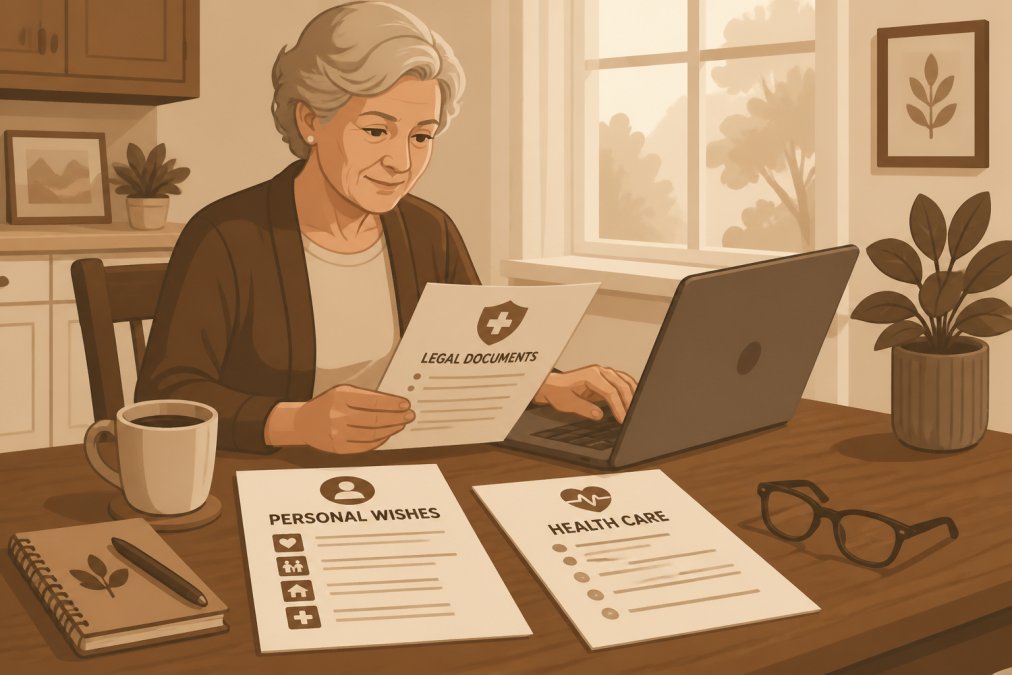
Choosing among five wishes alternatives depends on three variables: your estate complexity, your budget, and whether you need legal documents, personal legacy capture, or both.
| Alternative | Best For | Free Tier | Advance Directive Included |
|---|---|---|---|
| My Living Legacy Course | Personal wishes beyond legal forms | No | No (companion to legal docs) |
| FreeWill | Basic advance directives at no cost | Yes | Yes |
| Rocket Lawyer | Ongoing legal document access | 7-day trial | Yes |
| LegalZoom | Full estate planning bundles | No | Yes |
| Trust & Will | Families with dependents | No | Yes |
| Nolo's Quicken WillMaker | Self-directed planners | No | Yes |
| GoodTrust | Digital asset and legacy management | No | Yes |
1. My Living Legacy Course, Best for Personal Wishes Beyond Legal Forms
My Living Legacy Course occupies a category that none of the legal platforms touch. Legal documents tell your family what to do. This course tells them who you are.
The program walks you through seven guided modules and more than 420 reflective prompts, covering your life story, personal wishes, and final arrangements. The result is a companion to your will and advance directive that gives your family the context and emotional grounding that no statutory form can provide. Lifetime access means you can complete it at your own pace.
Visit the My Living Legacy Course website for current pricing and enrollment details.
2. FreeWill, Best Free Option for Basic Advance Directives
FreeWill is the strongest completely free option for creating a legally valid advance directive and basic will. The platform uses a guided questionnaire to generate state-specific documents that comply with local legal requirements.
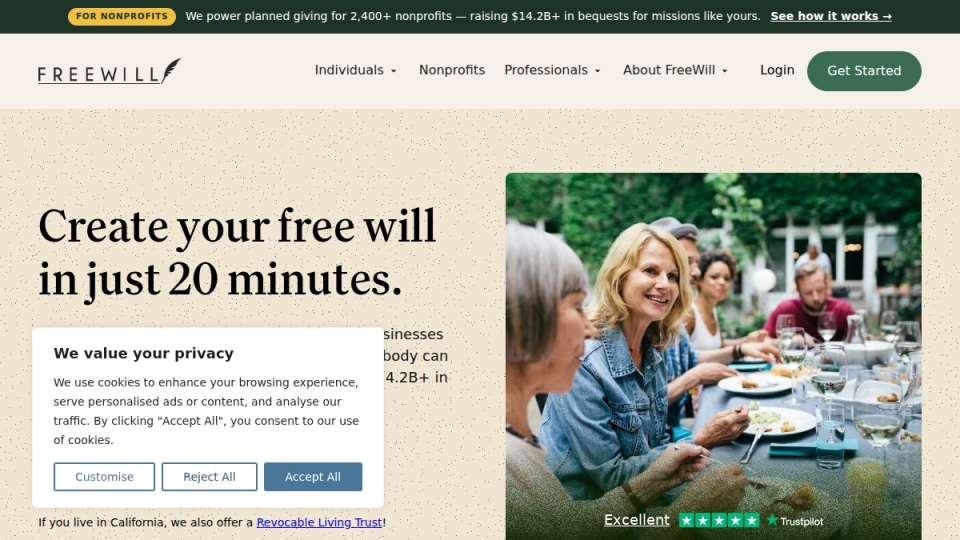
FreeWill does not offer living trusts or attorney consultation. For straightforward estates with no complex asset structures, that limitation rarely matters. FreeWill is funded by nonprofit partnerships and includes an option to add charitable bequests to your will.
3. Rocket Lawyer, Best for Ongoing Legal Document Access
Rocket Lawyer's value proposition is breadth. A membership gives you access to unlimited legal documents across categories, plus on-call attorney consultations. The seven-day free trial is long enough to create a complete advance directive and healthcare power of attorney at no cost if you cancel before the trial ends.
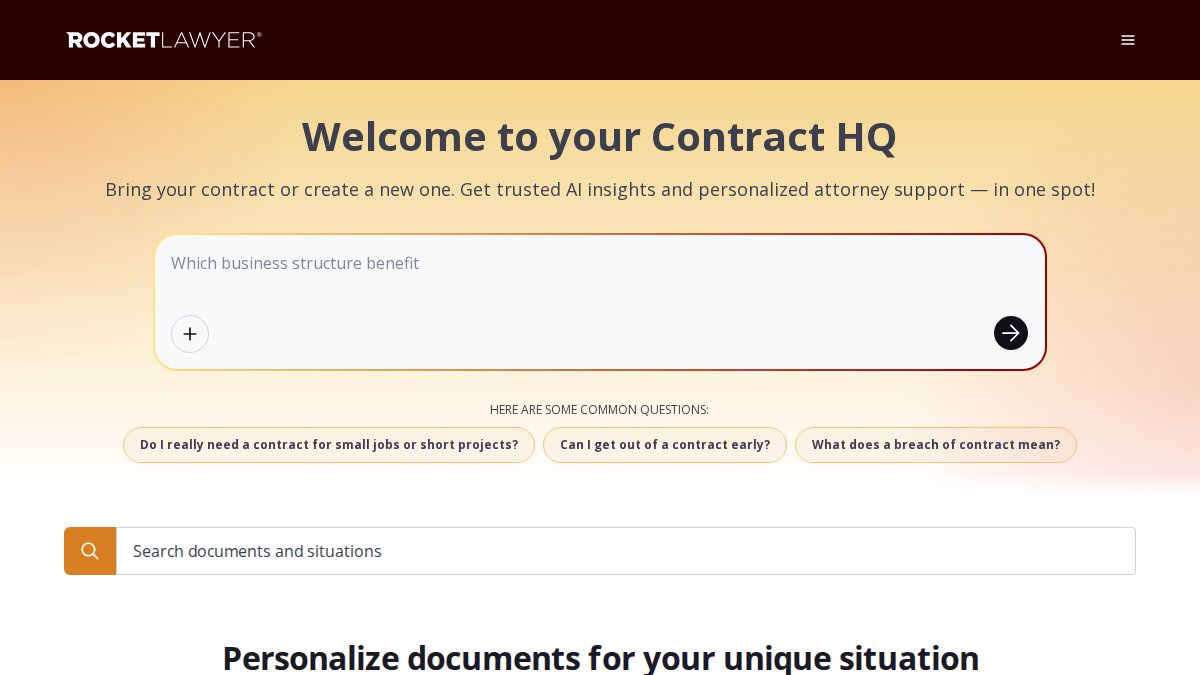
The subscription model at $39.99 per month makes sense for small business owners or individuals who anticipate needing multiple legal documents over time.
4. LegalZoom, Best for Full Estate Planning Bundles
LegalZoom offers estate planning bundles starting at $99 for a basic last will and $399 for a living trust. Optional attorney review meaningfully increases document reliability for complex situations.
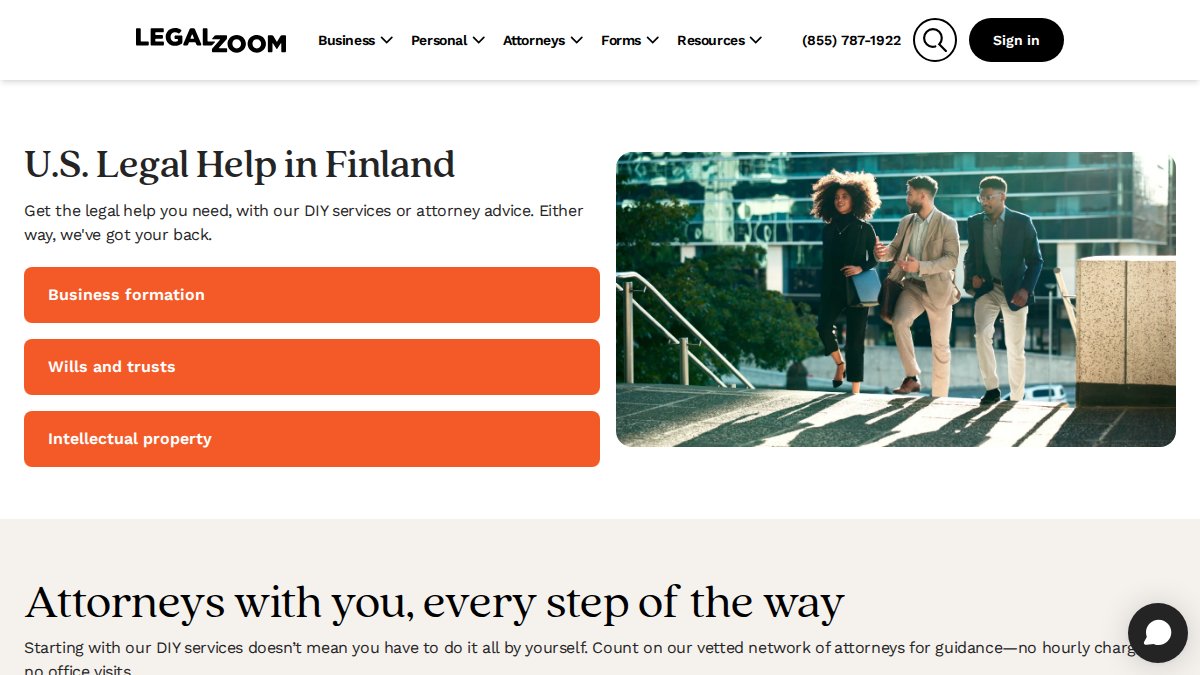
Annual renewal fees can apply for continued document access and updates.
5. Nolo's Quicken WillMaker & Trust, Best for Self-Directed Planners
Nolo has been publishing plain-language legal guides since 1971. Quicken WillMaker at $109 to $219 for a yearly subscription generates a comprehensive suite of estate planning documents, including wills, living trusts, healthcare directives, and financial powers of attorney, along with a legal manual explaining the reasoning behind each decision.
Quicken WillMaker does not support Louisiana residents due to that state's unique civil law system. For everyone else, this is the best option for people who want to understand what they are signing.
6. GoodTrust, Best for Digital Asset and Legacy Management
GoodTrust addresses a modern problem: your digital footprint, social media accounts, email archives, cryptocurrency, and online subscriptions do not automatically transfer or close at death. GoodTrust bundles advance directives with a digital vault and legacy planning tools for social media and online accounts.
Contact them directly for current rates. The platform is best suited for anyone with significant digital assets or online accounts that need managed succession.
7. Trust & Will, Best for Families With Dependents
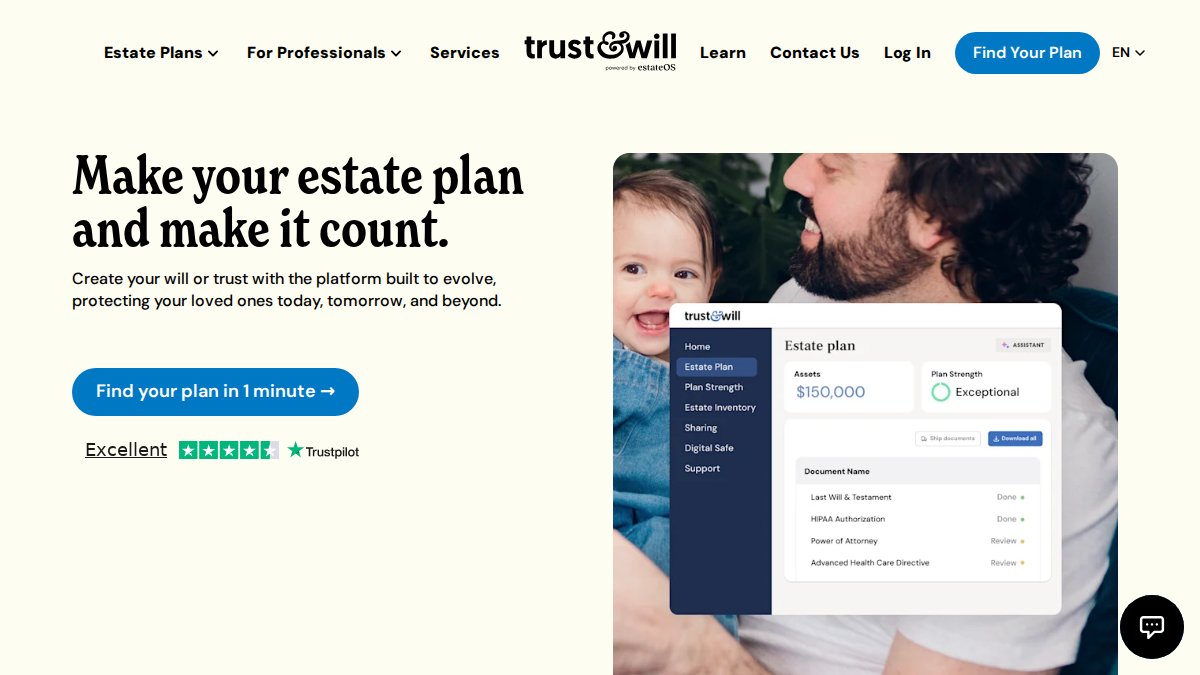
Trust & Will focuses exclusively on estate planning. For parents with minor children, designating a guardian is the single most important estate planning decision. Trust & Will's will plan starts at $199 for an individual and $499 for a trust plan.
Digital storage of completed documents is included in the plan cost. Attorney support is available in many but not all states, so verify availability for your location before purchasing.
Advance Healthcare Directive Templates: Paid vs. Free Cost-Benefit Analysis
State-provided forms are legally sufficient, cost nothing, and are updated when state statutes change. If your estate is simple and you are comfortable self-directing the process, free templates from your state health department or CaringInfo cover the legal baseline completely.
Paid services add value through complexity guidance, confidence, and convenience. Paid platforms guide you through decisions you might not know to make, such as whether to include a POLST form or how to address dementia-specific scenarios. Attorney access adds verification that free templates cannot provide.
A practical framework for choosing:
- Simple estate, healthy, no dependents: Start with your state's free statutory form
- Moderate complexity or significant assets: Nolo's Quicken WillMaker or Trust & Will
- Ongoing legal needs beyond estate planning: Rocket Lawyer membership
- Comprehensive estate with attorney oversight: LegalZoom with attorney assist plan
- Personal legacy and family communication: My Living Legacy Course as a companion to any of the above
Legal documents and personal legacy capture serve different purposes. The best approach combines a legally valid advance directive with a structured way to communicate the values and stories behind it.
Legal Validity: Notarization, Witness Requirements, and State Statutes
Legal validity is where advance directive planning most often breaks down. A document that is not properly executed is not legally binding, regardless of how thoughtfully it was drafted.
The American Bar Association's consumer guide to advance directives outlines the core execution requirements that vary by state. Most states require either two adult witnesses or a notary public, and many require both. Witnesses typically cannot be your healthcare provider, a facility employee, or anyone who stands to inherit from your estate.
Patient autonomy and informed consent are the legal foundations of advance directive law in the United States. The Patient Self-Determination Act requires healthcare facilities that receive Medicare or Medicaid funding to inform patients of their right to execute advance directives. That federal baseline does not standardize the documents themselves, which is why state statutes govern validity.
Once executed, your advance directive should be filed with your medical records, shared with your healthcare proxy, and provided to your primary care physician.
Digital Storage and Accessibility for Your Advance Directive
The most carefully drafted advance directive fails if no one can find it when it matters.

Several states maintain official advance directive registries where you can file your document and authorize healthcare providers to access it. Check your state health department's website to determine whether a registry exists in your state.
Practical accessibility requires a multi-channel approach:
- Give a signed copy to your healthcare proxy and any alternate proxy
- File a copy with your primary care physician and any specialists managing chronic conditions
- Provide a copy to any hospital or care facility where you receive regular treatment
- Store a digital copy in a secure location your proxy can access, such as a password-protected cloud folder
- Keep a wallet card or phone lock screen note indicating that an advance directive exists and where to find it
Trust & Will includes digital document storage as part of its plan cost. For documents stored with other platforms, verify whether access continues if you cancel your subscription.
Choosing the Right Alternative for Your Situation
The right choice among five wishes alternatives depends on where you are in the planning process and what you are actually trying to accomplish.
If you have done nothing yet, start with your state's free statutory form to establish a legal baseline. If you have dependents, significant assets, or a complex family situation, move to a paid platform that offers attorney support.
Legal documents communicate instructions. Your family will carry the weight of decisions your advance directive never anticipated, and they will carry them without knowing why you believed what you believed or what mattered most to you.
That gap is what My Living Legacy Course is designed to fill. Through seven modules and more than 420 reflective prompts, the course guides you through capturing your life story, personal wishes, and the context behind your final arrangements. It is not a replacement for legal documents but the companion resource that makes those documents meaningful.
For proactive planners who have already completed a legal will and want a structured way to pass down memories and instructions, My Living Legacy Course addresses exactly that need. The one-time fee provides lifetime access, so you can return to prompts as your thinking deepens over time.
End-of-life planning has two layers that most people only address one of. The legal layer, covered by advance directives, living wills, and healthcare proxies, tells your family what to do. The personal layer tells them who you are and why you made the choices you made. My Living Legacy Course is built for that second layer, with seven guided modules and more than 420 reflective prompts that help you organize your story, wishes, and final arrangements in a format your family will actually be able to use. Get started with My Living Legacy Course and give your family the clarity and comfort that no legal document can provide on its own.
Frequently Asked Questions
Is a Five Wishes document legally binding in all 50 states?
Five Wishes meets the legal requirements for an advance directive in most U.S. states, but not all. Some states require forms that follow specific statutory language, and Five Wishes may not satisfy those requirements on its own. Before relying on it, check your state's requirements. Many states offer their own free, legally compliant advance directive forms through the state health department or attorney general's office, which are guaranteed to meet local statutes.
What are the best free alternatives to Five Wishes for advance directives?
FreeWill is one of the strongest free five wishes alternatives, offering state-specific advance healthcare directive templates at no cost. State health department websites also provide free advance directive forms by state that are fully compliant with local law. Rocket Lawyer offers a seven-day free trial that covers document creation. For those who want something beyond a legal template, capturing personal stories, spiritual preferences, and comfort care wishes, a guided course like My Living Legacy Course serves as a meaningful companion to those legal documents.
What is the difference between a living will and a healthcare power of attorney?
A living will documents your medical treatment preferences in writing, covering treatment limitations, do not resuscitate orders, comfort care, and end-of-life wishes. A healthcare power of attorney (also called a healthcare proxy or durable power of attorney for healthcare) appoints a surrogate decision maker to make medical decisions on your behalf if you lose competency. Many estate planning attorneys recommend completing both documents, since a living will cannot anticipate every medical scenario your healthcare advocate may face.
Do I need a lawyer to create a legally valid advance directive?
No, an attorney is not required to create a legally valid advance directive in most U.S. states. Most states require either notarization, two adult witnesses, or both, but not an attorney's signature. Free platforms like FreeWill and state-issued advance directive forms by state guide you through those execution requirements. However, if your medical treatment preferences are complex, or your estate planning involves a trust, consulting an estate planning attorney adds an extra layer of protection.
How is a personal legacy course different from an advance directive or living will?
An advance directive or living will is a legal document that instructs healthcare providers on your medical treatment preferences. A personal legacy course like My Living Legacy Course goes further, it guides you through documenting your life story, values, spiritual preferences, emotional wishes, and final arrangements for your family. It is not a substitute for legal documents, but a companion to them, giving loved ones the personal context and clarity that a legal template cannot capture.