 blog
blog
Five Wishes vs Digital Legacy Courses: 2026 Comparison
Table of Contents
- What Five Wishes and Digital Legacy Courses Actually Do
- Five Wishes: A Simple Document for End-of-Life Preferences
- Digital Legacy Courses: Guided Storytelling Beyond Legal Documents
- Creating Advance Directive Templates That Work for Your Family
- How to Write a Legacy Letter Your Children Will Actually Read
- Building a Digital Estate Planning Checklist for Peace of Mind
- Five Wishes vs Digital Legacy Courses: Which One Fits Your Situation
- Conclusion
- Frequently Asked Questions
Last Updated: September 4, 2026
What Five Wishes and Digital Legacy Courses Actually Do
Planning for the end of life often stalls because people assume a legal will is enough. A will distributes assets, but it rarely tells your family how you want to be cared for, what brings you comfort, or which memories matter most. Five Wishes vs digital legacy courses is a comparison of two distinct tools that address this gap in different ways: one is a statutory document for healthcare preferences, and the other is a guided process for capturing your broader life story and final instructions.
At My Living Legacy Course, we help families bridge the gap between legal paperwork and meaningful communication. A digital legacy course is a structured online program that walks you through organizing your personal history, values, and end-of-life wishes into a format your loved ones can keep forever.
The essential difference comes down to scope. Five Wishes focuses on medical decisions and your treatment preferences. Digital legacy courses go further, capturing the stories and guidance that help your family understand who you are and what you wanted, not just what procedures you approved.
Five Wishes: A Simple Document for End-of-Life Preferences
Five Wishes is a widely recognized advance directive template that combines a living will and medical power of attorney into a single document. It is legally valid in all 50 states, the District of Columbia, and U.S. territories, a critical distinction that sets it apart from generic online forms. The document asks you to name a healthcare proxy, state your treatment preferences, and describe your comfort care wishes in plain language rather than legal jargon.
The legal validity of Five Wishes rests on its compliance with state advance directive statutes. Most states require that an advance directive be signed, witnessed by two disinterested parties, and sometimes notarized. Five Wishes meets these requirements in all jurisdictions, which is why hospitals and healthcare systems recognize it without hesitation. When your family presents Five Wishes to a hospital, the medical team can act on it immediately without questioning its legal standing.
However, state laws do vary in specific ways that matter. Some states impose requirements on who can serve as a witness (for example, some prohibit healthcare workers or family members who stand to inherit), while others have different rules for what constitutes a valid signature or whether notarization is mandatory. The Five Wishes document includes state-specific instructions on its cover page, and the organization behind it (Aging with Dignity) maintains a state-by-state guide on their website to help users understand local requirements before they sign.
The practical strength of Five Wishes is that it answers the clinical questions hospitals will ask: Do you want CPR? Do you want a feeding tube? Do you want antibiotics if you develop an infection? It also allows you to name someone to make decisions if you cannot communicate, and it includes a section for your spiritual or personal beliefs about life and death. You can complete it in an afternoon, and the document is recognized immediately by healthcare providers.
The limitation is scope. Five Wishes addresses medical decisions and your treatment preferences, but it does not tell your family which memories you treasure, what you want said at your service, how to handle your digital accounts, or what values guided your life. Those conversations happen outside the form, and often they never happen at all. For many families, the advance directive handles the legal compliance side of planning while leaving an emotional and informational void. Your children may know your medical wishes but have no record of your values, your financial accounts, or the stories that defined your life.
Digital Legacy Courses: Guided Storytelling Beyond Legal Documents
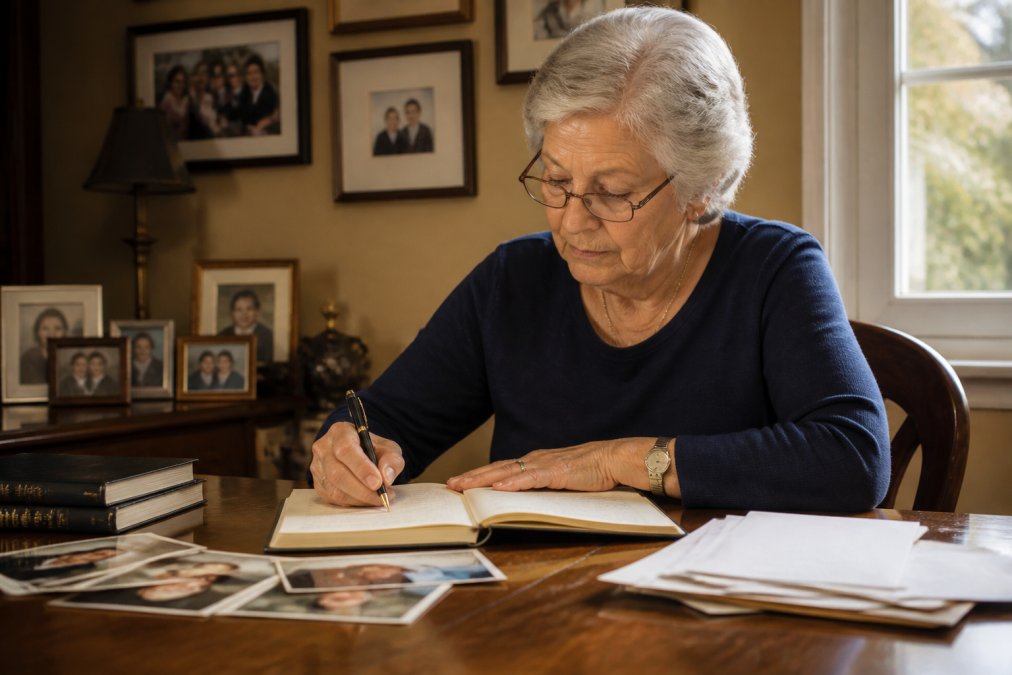
A digital legacy course shifts the focus from forms to narrative. Rather than filling out a checklist, you work through modules that prompt you to reflect on your life, your relationships, and the guidance you want to leave behind. The result is a comprehensive record that your family can turn to for years.
My Living Legacy Course organizes this process through seven guided modules and more than 420 reflective prompts. You capture your story, articulate your final arrangements, and document the non-legal instructions that bring clarity during a difficult time. Because it is a companion to your will, it complements rather than replaces the legal documents your attorney prepares.
The practical advantage is structure. Most people intend to write a legacy letter or record their wishes but never find the time. A guided course removes the blank-page problem by asking specific questions in a logical order. You work at your own pace, and lifetime access means you can revisit and refine your entries as circumstances change.
Creating Advance Directive Templates That Work for Your Family
Advance directive templates only work when your family actually understands and respects them. A completed form stored in a lawyer's file cabinet helps no one if your children never see it or discuss it. The document must be shared, explained, and integrated into your broader estate planning.
Start by reviewing the legal requirements in your state. Five Wishes is valid in most states, but you should confirm that your document meets local standards for witness and notary requirements. The National Institute on Aging's advance care planning guidance emphasizes that discussing your wishes with family and healthcare providers is as important as completing the paperwork itself.
Pair your legal documents with a personal companion. Your advance directive tells your family what to do medically; a legacy document tells them who you are and what you valued. Together, they provide complete guidance for the people who will make decisions on your behalf.
How to Write a Legacy Letter Your Children Will Actually Read
A legacy letter is not a legal document. It is a personal message that captures your values, your hopes for your children, and the stories that shaped you. The best legacy letters are specific, honest, and free of the pressure to summarize an entire life.
Begin with a single memory that defines a value you want to pass down. Describe the moment, the people involved, and why it mattered. Then connect that memory to the guidance you want your children to carry forward. This structure keeps the letter grounded and authentic rather than abstract.
Keep the tone conversational. Write as if you are speaking to your children across the kitchen table, not delivering a formal address. A common mistake is trying to sound profound, which produces stiff prose that does not reflect your real voice. Your family wants to hear you, not a polished version of you.
Building a Digital Estate Planning Checklist for Peace of Mind
Digital estate planning extends beyond your will to cover the accounts, files, and online presence you leave behind. A practical checklist ensures your family can access what they need and close what they no longer need. This includes passwords, financial accounts, social media profiles, and digital photos. But before you consolidate sensitive information, especially health directives and personal wishes, you need to understand how that data is protected.
The security question is legitimate. Health information is protected under the Health Insurance Portability and Accountability Act (HIPAA) when it is held by a covered entity like a hospital or health plan, but your personal health records stored on a third-party digital legacy platform are not automatically HIPAA-protected. This is a critical distinction. If you upload your advance directive, medical history, or end-of-life wishes to a digital course or storage service, that platform's privacy policy and encryption standards become your only defense against unauthorized access.
When evaluating a digital legacy course or online storage service, ask these specific security questions: (1) Does the platform use end-to-end encryption, meaning your data is encrypted on your device before it is sent to their servers, and they cannot read it even if they wanted to? (2) Is the encryption standard AES-256 or equivalent, which is the same standard the federal government uses for classified information? (3) Does the platform allow you to set an access password separate from your login password, so your executor cannot read your wishes until you authorize them to? (4) Where are the servers physically located, and which state and federal laws govern data breach notification? (5) Does the company have a published security audit or third-party certification (such as SOC 2 Type II compliance) that an independent auditor has verified?
Many digital legacy courses and password managers store data in encrypted form, but the encryption key is held by the company, not by you. This means a data breach, a rogue employee, or a government subpoena could theoretically expose your information. Other platforms offer zero-knowledge architecture, where you hold the encryption key and the company cannot access your data even if they wanted to. The trade-off is that if you lose your password, your data may be permanently inaccessible, there is no "forgot password" recovery.
Create a single document that lists your important accounts, the devices you use, and where you store critical files. Include instructions for how you want each account handled, whether that means deletion, memorialization, or transfer to a family member. For sensitive health information, consider whether you need it stored digitally at all, or whether a physical copy in a safe deposit box with your executor is more appropriate. If you do store health directives digitally, use a platform with transparent encryption standards and test the access process with your executor before you need it.
Store this information securely and tell your executor where to find it. The FTC guidance on digital estate planning notes that planning your digital legacy helps prevent identity theft and ensures your wishes are followed after you pass. Review your list annually and update it whenever you change passwords or open new accounts. If you use a password manager or digital legacy platform, verify that your executor knows the master password and has tested their ability to access your account.
| Task | What to Include | Security Consideration | Frequency |
|---|---|---|---|
| Document accounts | Email, banking, social media, subscriptions | Use encrypted storage | Update when accounts change |
| Record access | Passwords, security questions, device codes | Separate from login credentials | Review every 6 months |
| Store health directives | Advance directive, medical wishes, organ donation | Verify end-to-end encryption | Confirm annually |
| State your wishes | Delete, memorialize, or transfer each account | Document in writing | Confirm annually |
| Share with family | Tell your executor where the list lives | Test their access before you need it | After every update |
Five Wishes vs Digital Legacy Courses: Which One Fits Your Situation
The right choice depends on what you are trying to accomplish. If your primary concern is ensuring your medical treatment preferences are documented and legally enforceable, Five Wishes is a proven, low-cost tool. If you want your family to understand your life, your values, and your final wishes beyond the clinical details, a digital legacy course provides the structure to make that happen.
Many families find that both tools serve different purposes. Five Wishes handles the healthcare decisions that doctors and hospitals will ask about. A digital legacy course, like the one offered by My Living Legacy Course, captures the personal history and guidance that no medical form can convey. Together, they give your family complete clarity during an emotional time.
Consider your family's needs honestly. Will they find comfort in a completed form, or will they search for meaning and connection? The families who report feeling most supported are those who receive both legal instructions and a personal record of their loved one's life. According to research on family communication at end of life, families who discussed personal values and stories before death reported less distress during bereavement.
Conclusion
Planning for the end of life is about more than signing documents. It is about making sure the people you love know what mattered to you and what you wanted for them. A legal will and advance directive templates handle the administrative side, but they leave the human side unaddressed.
My Living Legacy Course fills that gap with a guided, compassionate approach to capturing your story and your wishes. With seven modules and over 420 reflective prompts, you can work through your legacy at your own pace, knowing your family will receive the clarity and comfort they need. The one-time fee provides lifetime access, so you can refine your record as life evolves.
AARP's guide to end-of-life conversations reminds us that the greatest gift you can give your family is having the conversation before you need to. Get started with My Living Legacy Course and give your loved ones the story behind the documents.
Frequently Asked Questions
Is Five Wishes a legally binding document?
Five Wishes is recognized as a valid advance directive in most states, but it functions as a guide for your healthcare preferences rather than a legally binding medical power of attorney. It documents your end-of-life preferences and treatment wishes, helping your healthcare proxy understand your values. However, you may still need a separate medical power of attorney document for full legal authority. Always verify your state's specific requirements, as some states have their own advance directive forms.
Do I need a digital legacy course if I already have a living will?
A living will covers your medical treatment preferences, but a digital legacy course addresses what your living will cannot: your life story, personal values, financial instructions, and messages for loved ones. While your living will answers 'what medical care do I want,' a digital legacy course answers 'who am I, what mattered to me, and what do I want my family to know?' Many people find that having both creates a complete picture for their family during difficult times.
How much does a Five Wishes document cost compared to a digital legacy course?
Five Wishes is typically available at low cost or free through some organizations, though pricing varies by state and provider. Digital legacy courses vary widely in price depending on features, guidance level, and access duration. Rather than comparing price alone, consider what each delivers: Five Wishes provides a straightforward legal template, while a comprehensive digital legacy course offers guided modules, reflective prompts, and structured support for capturing your full story. Your choice depends on whether you want a simple legal form or a more thorough legacy-building experience.
Can I use both Five Wishes and a digital legacy course together?
Yes, and many people do. Five Wishes handles your medical and legal end-of-life decisions, while a digital legacy course captures your personal story, values, and non-legal wishes. They serve different purposes: one is a formal document for healthcare decisions, the other is a comprehensive record of your life and preferences for your family. Using both ensures your family has both the legal clarity they need and the personal understanding that helps them honor your wishes with confidence.
Frequently Asked Questions
Q: Is Five Wishes a legally binding document?
Five Wishes is recognized as a valid advance directive in most states, but it functions as a guide for your healthcare preferences rather than a legally binding medical power of attorney. It documents your end-of-life preferences and treatment wishes, helping your healthcare proxy understand your values. However, you may still need a separate medical power of attorney document for full legal authority. Always verify your state's specific requirements, as some states have their own advance directive forms.
Q: Do I need a digital legacy course if I already have a living will?
A living will covers your medical treatment preferences, but a digital legacy course addresses what your living will cannot: your life story, personal values, financial instructions, and messages for loved ones. While your living will answers 'what medical care do I want,' a digital legacy course answers 'who am I, what mattered to me, and what do I want my family to know?' Many people find that having both creates a complete picture for their family during difficult times.
Q: How much does a Five Wishes document cost compared to a digital legacy course?
Five Wishes is typically available at low cost or free through some organizations, though pricing varies by state and provider. Digital legacy courses vary widely in price depending on features, guidance level, and access duration. Rather than comparing price alone, consider what each delivers: Five Wishes provides a straightforward legal template, while a comprehensive digital legacy course offers guided modules, reflective prompts, and structured support for capturing your full story. Your choice depends on whether you want a simple legal form or a more thorough legacy-building experience.
Q: Can I use both Five Wishes and a digital legacy course together?
Yes, and many people do. Five Wishes handles your medical and legal end-of-life decisions, while a digital legacy course captures your personal story, values, and non-legal wishes. They serve different purposes: one is a formal document for healthcare decisions, the other is a comprehensive record of your life and preferences for your family. Using both ensures your family has both the legal clarity they need and the personal understanding that helps them honor your wishes with confidence.