 how-to
How to Organize Your Personal Life Story: A Step-by-Step Guide
Table of Contents
- Why Organizing Your Personal Life Story Matters
- Gather Your Materials and Set Up Your System
- Create a Life Timeline to Structure Your Narrative
- Using Life Story Writing Prompts to Capture Key Moments
- Develop a Memoir Outline Template for Your Story
- How to Organize Family History and Documents
- Establish a Categorization and Tagging System
- Common Mistakes to Avoid When Organizing Your Life Story
- Frequently Asked Questions
Last Updated: August 5, 2026
Why Organizing Your Personal Life Story Matters
Your life contains stories that deserve to be preserved. Without intentional organization, these narratives scatter across old journals, faded photographs, digital folders, and memory alone. When the time comes to pass them forward, your family faces chaos instead of clarity.
Organizing your personal life story transforms disconnected memories into a coherent whole. This isn't about vanity, it's about ensuring your children, grandchildren, and future generations understand who you were, what mattered to you, and why you made the choices you did. A will handles financial matters, but it says nothing about your values, life lessons, or final wishes. Your family needs more than assets distributed; they need your voice, your context, and your guidance. Organizing your personal life story bridges that gap.
Gather Your Materials and Set Up Your System
Before you begin organizing your personal life story, assemble everything you'll need in one place. This setup phase determines whether you'll actually finish the project.
What You'll Need Before Starting
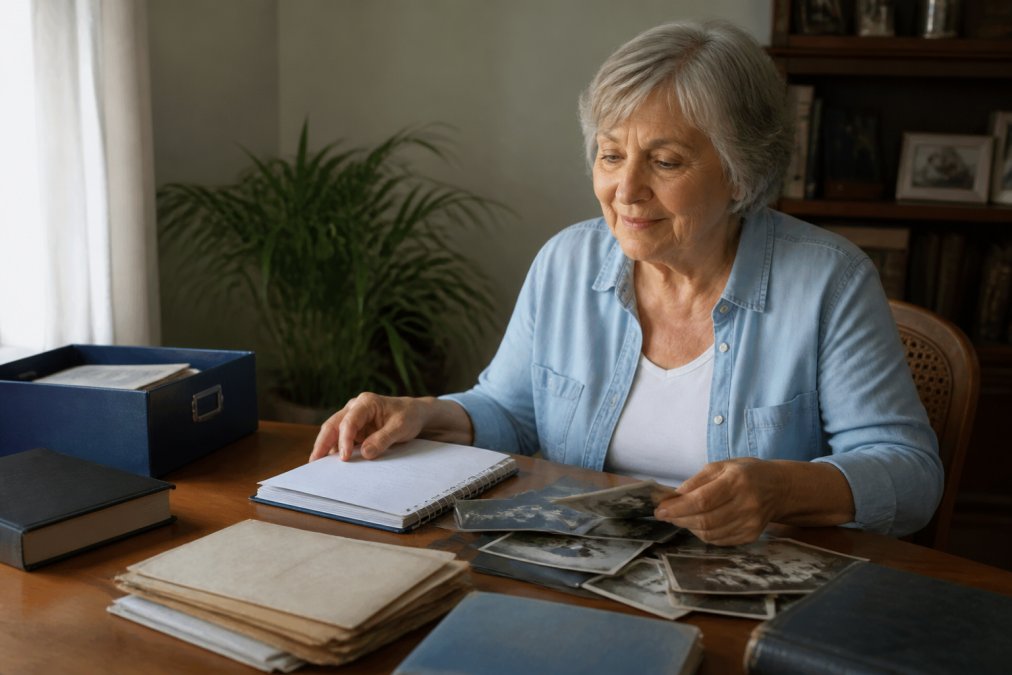
Gather old photographs, letters, journals, diaries, certificates, newspaper clippings, and any documents that hold personal meaning. Don't worry about organization yet, just collect them. This step is often emotionally intense because handling these artifacts triggers memories, that's normal.
Choose your digital storage system: a folder on your computer, cloud storage like Google Drive or Dropbox, or a dedicated legacy platform. The key is accessibility so your family can find these materials after you're gone.
Decide whether you'll work analog, digital, or hybrid. Some prefer handwriting stories in a journal; others type everything. Many combine both approaches. There's no wrong choice, only what works for your workflow.
Create a simple workspace, a corner of your desk, filing cabinet, or shelf where everything is accessible without overwhelming you. Commit to a realistic schedule. Many people work through this project over several months, spending 30 minutes to an hour per week. Consistency matters more than intensity.
Create a Life Timeline to Structure Your Narrative
A life timeline provides the skeleton for your entire story. Without chronological structure, your narrative becomes fragmented and hard to follow.
Start by listing major life events in order: birth, education, first job, marriage, children, career changes, relocations, significant losses, and achievements. These anchor points create the framework. Use a large piece of paper or digital document to create a visual timeline with space between entries for additional details.
The act of sequencing events reveals patterns you might not have noticed. You'll see how one decision led to another and how seemingly unrelated events actually connected. Include both major milestones and smaller moments that felt significant. A promotion matters. So does the friend who changed your perspective in college. Your timeline should reflect what actually shaped you, not just what looks impressive from the outside.
Using Life Story Writing Prompts to Capture Key Moments
Writing prompts transform a blank page into a guided conversation with yourself. Rather than staring at "Write your life story," prompts ask specific questions that unlock memories and details you might otherwise overlook.
Effective prompts ask about a specific time period or theme and invite sensory details. Instead of "Tell me about your childhood," ask: "What's one smell from your childhood home that you still remember? What does it remind you of?" Sensory details make stories vivid and help your family picture your life.
Work through prompts in clusters, dedicating one session to childhood, another to your career, another to relationships. This thematic approach helps you go deeper. Don't force answers, if a prompt doesn't resonate, skip it. Write without editing. Your family wants to hear from you, not a sanitized version. Imperfect, honest writing is more powerful than flawless but distant writing.
Develop a Memoir Outline Template for Your Story
A memoir outline transforms your timeline and writing prompts into a structured narrative.
Organizing Your Outline by Life Chapters
Divide your life into chapters that make sense for your story. Some organize by decade; others by major life themes: childhood, education, career, relationships, parenthood, retirement. Still others by geography. Your structure should reflect what your story emphasizes.
Each chapter needs an opening that orients your reader. "The Chicago Years, 1985-1995" tells your family when and where this chapter takes place. Within each chapter, organize stories chronologically or thematically. Include transitions between chapters to help your family follow the thread of your narrative.
How to Organize Family History and Documents
Your personal life story connects to your family's larger history. Organizing family history and documents alongside your narrative creates context for your own story.
Managing Digital and Physical Records
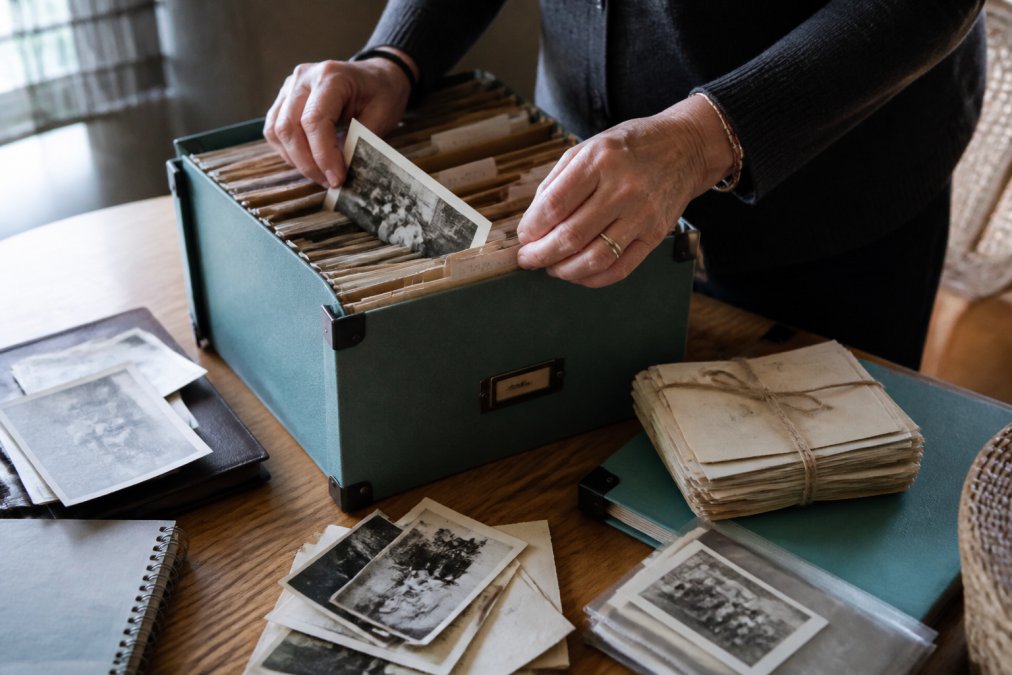
Categorize your materials: birth certificates, marriage licenses, photographs, letters, journals, medical records, financial documents, and legal papers. Physical records need acid-free storage in a cool, dry place. Photographs deteriorate in basements and attics.
Create a digital archive by photographing or scanning important documents and photographs. Use clear file naming: "1985_Wedding_Photo_01" rather than "IMG_4521." Organize digital files in folders by year, family member, or document type.
Include metadata. For photographs, note the date, location, and people pictured. For documents, note the date, type, and why it matters. This context is invaluable for your family later.
Store originals safely in a safe deposit box for irreplaceable documents and photographs. Store digital files in multiple locations: cloud storage, an external hard drive, and perhaps a copy with a trusted family member. Create an index listing all important documents, where they're stored, and how to access them.
Establish a Categorization and Tagging System
As your materials grow, you need a system to find things quickly. Create categories that match your life chapters. Use tags for cross-referencing, a photograph might be tagged with the year, location, people in it, and event.
Develop a naming convention and stick to it. "1992_Chicago_SarahGraduation_01" tells you the year, location, event, and that there are multiple related files. Consider who will need to access these materials, your system should make sense to family members reading your story after you're gone.
Regular maintenance prevents chaos. Every few months, review new materials and add them to your system. Don't let unsorted photographs accumulate.
Common Mistakes to Avoid When Organizing Your Life Story
The biggest mistake is perfectionism. People wait for the "right time" to start, imagining they'll do this perfectly once they have the perfect system. That time never comes. Start messy. Start imperfect. You can refine later.
Another common error is trying to include everything. You don't need to document every day of your life. Capture the moments that shaped you, the decisions that mattered, the people who changed you, and the lessons you learned. Selective storytelling is more powerful than exhaustive documentation.
Some people get stuck on emotional content. Certain memories hurt. Certain relationships were complicated. The impulse to skip these moments is natural, but your story is incomplete without them. Your family needs to understand your full humanity, including struggles and mistakes.
Avoid hoarding systems you never use. Choose simple tools you'll actually maintain. A folder on your computer and a notebook work better than an elaborate system you abandon.
Don't assume your family will ask questions later. They won't. Document context now while you're here to provide it. Explain why you made certain choices, what you were feeling at particular moments, and what mattered most to you.
Finally, don't organize alone if you don't want to. Many people find the process easier and more meaningful with a family member or friend nearby. Someone to listen to stories and ask follow-up questions makes the work feel less isolating and ensures someone else knows where your materials are stored.
Organizing your personal life story is one of the most meaningful projects you can undertake. It clarifies your legacy, preserves your voice, and provides your family with something far more valuable than legal documents: a direct connection to who you were and why your life mattered. My Living Legacy Course guides you through this entire process with seven comprehensive modules and over 420 reflective prompts, ensuring you capture your narrative completely and create a lasting legacy that truly informs and comforts those you cherish. Start today and give your family the gift of understanding your full story.
Frequently Asked Questions
How do I start writing my life story if I'm not sure where to begin?
Begin with a life timeline, marking major events, relationships, and transitions. Then use life story writing prompts to explore specific periods or themes. Start with eras that feel easiest, childhood, a career milestone, or a significant relationship, rather than forcing chronological order. Many people find it helpful to work through prompts that ask about your proudest moments, biggest challenges, and people who shaped you. The prompts guide your thinking so you don't face a blank page.
What's the difference between a will and organizing my personal life story?
A will is a legal document that directs how your assets are distributed. Your personal life story serves a different purpose: it shares who you are, why you made certain decisions, what matters most to you, and non-legal wishes like funeral preferences or messages to loved ones. Organizing your life story creates the emotional and practical context that helps your family understand the person behind the will and reduces confusion during difficult times.
Is it really possible to organize my life story if I'm not tech-savvy?
Yes. Start simple: use a notebook and pen, or a basic digital tool like Google Docs or Word. Write in chronological order or by life chapters, family, career, relationships, lessons learned. You can organize physical documents in labeled folders or boxes. The structure matters more than the technology. Many people find that handwriting first, then typing or scanning, works well. The goal is capturing your story in a way that feels manageable to you.
How do I decide what to include in my personal life story?
Include events and people who shaped who you became: your early years, education, career, relationships, challenges you overcame, and values you hold. Add practical details your family needs: passwords, account locations, funeral wishes, and whom to contact. Include stories that reveal your personality, humor, kindness, resilience. Skip nothing that felt significant to you, even if it seems small. Your family will treasure details that help them understand you more deeply, not just facts they can find elsewhere.