 how-to
How to Preserve Family Stories: A Complete Guide
Table of Contents
- Why Preserving Family Stories Matters
- Setting Your Intention and Goals for Family History
- Family History Interview Questions to Capture Your Narrative
- Recording and Documenting Oral History
- Best Digital Tools for Family Storytelling
- Preserving Family Heirlooms and Documents
- Creating a Legacy Planning Guide for Your Family
- Frequently Asked Questions
Last Updated: August 26, 2026
Why Preserving Family Stories Matters
Your family's history is irreplaceable. Once it's gone, it's gone forever. The stories your grandparents tell, the lessons your parents learned, the decisions that shaped your family's path contain wisdom, context, and connection that no legal document can capture.
Most families discover this truth too late. After a loved one passes, adult children find themselves searching for answers to questions they never thought to ask. Where did the family come from? What were the hardships? What values mattered most? These gaps rob future generations of their heritage.
Preserving family stories doesn't require professional equipment or expensive services. It requires intention, a willingness to listen, and a structured approach. At My Living Legacy Course, we've worked with many people who wanted to pass down their narratives thoughtfully. The ones who succeeded started with a clear goal and a simple process.
When you preserve family stories, you create a record that future generations will treasure, give your loved ones clarity about your wishes and values beyond what a will provides, and process your own life narrative in a way that brings peace and purpose.
Setting Your Intention and Goals for Family History
Before you record a single story or organize a single photograph, get clear on why you're doing this. Your intention shapes everything that follows.
Some people want to preserve family stories as a gift to their children. Others are motivated by a recent loss and want to prevent their own family from facing the same confusion and regret. Still others see legacy planning as the natural companion to their will, filling in the emotional and practical details that legal documents can't address.
What matters is naming your intention explicitly. Write it down. Keep it visible as you work. When the process feels overwhelming, your intention will remind you why it's worth doing.
Your goals should be specific and achievable. Instead of "preserve family stories," ask yourself: Do I want to record audio interviews with my children? Do I want to digitize and organize my photo collection? Do I want to write down recipes and family traditions? Do I want to create a document that explains my values and wishes to my family?
Many people find that their goal evolves as they work. That's normal. Your intention and goals are flexible guides, not rigid rules.
Family History Interview Questions to Capture Your Narrative
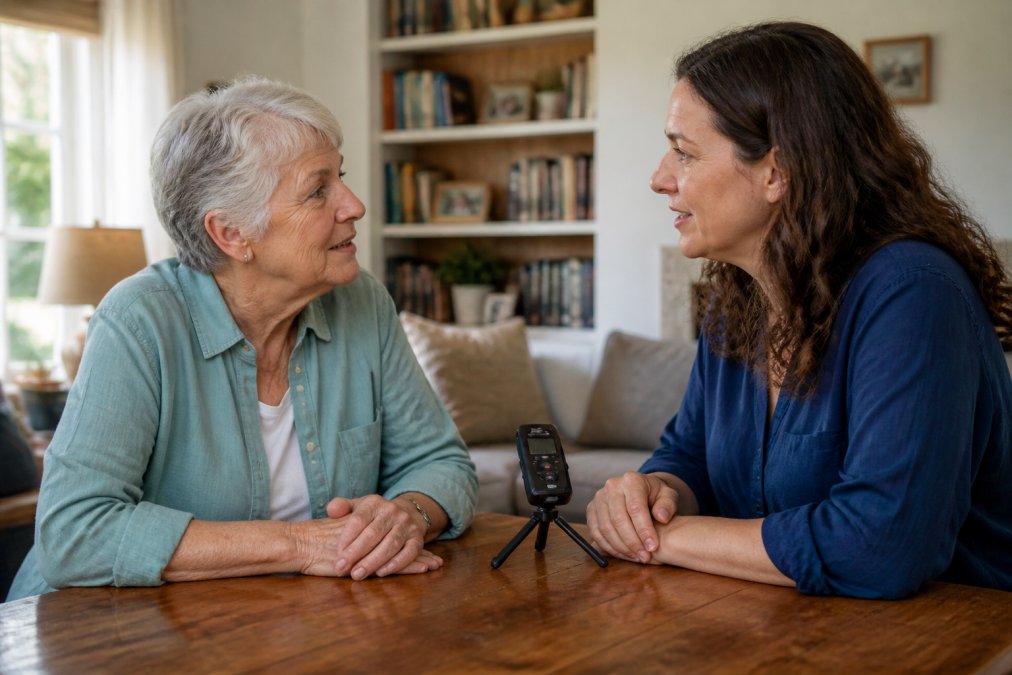
The right questions unlock the stories that matter most. Open-ended questions that invite reflection work better than yes-or-no questions.
Opening Questions About Early Life
Start with questions that ground your listener in a specific time and place.
"Tell me about the house or neighborhood where you grew up. What do you remember most vividly?" This question invites sensory detail, sights, sounds, smells, that bring a story to life.
"Who were the most important people in your childhood, and what did they teach you?" This opens the door to understanding influence and values without asking directly.
"What was your family's financial situation like, and how did that shape your choices?" Money conversations explain so much about the decisions people made.
"What did your parents expect from you, and how did you respond to those expectations?" This reveals the tension between family expectations and individual identity.
Asking Follow-Up Questions for Deeper Stories
The magic happens in the follow-up. When someone gives you a short answer, dig deeper with genuine curiosity.
If they say, "My childhood was hard," ask: "What made it hard? Can you give me a specific example?" Follow-up questions show you're listening and help your interviewee move from surface-level summary into actual memory.
"How did that experience change the way you approach [related situation]?" This bridges past and present, showing how early stories shaped adult choices and values.
"What would you want your grandchildren to know about that?" This invites your interviewee to extract the lesson or wisdom from the story, transforming a personal anecdote into intergenerational teaching.
Recording and Documenting Oral History
Oral history is one of the most accessible ways to preserve family stories. You don't need expensive equipment or professional training.
Start with what you have. A smartphone voice recorder works perfectly well for capturing audio. If you want to preserve video, your phone's camera is sufficient. The quality of the story matters far more than the quality of the recording.
Before you hit record, do a trial run. Test your equipment in the space where you'll be recording. Check for background noise, air conditioning, traffic, television.
Set a time limit. Most people can speak authentically for 45 minutes to an hour before fatigue sets in (apa.org). Plan for multiple sessions rather than one marathon interview.
After recording, create a transcript or detailed notes. A summary of the key stories and quotes is often more useful than a word-for-word transcription (loc.gov). This written record makes it easier to search, share, and preserve the content long-term.
Store your recordings in at least two places. Keep the original files on your computer, but also save them to cloud storage or an external hard drive. Digital files can be lost to hardware failure, so redundancy is essential.
Best Digital Tools for Family Storytelling
Several tools can help you organize, store, and share family stories.
Voice recording apps like Voice Memos (built into iPhones) or Google Recorder (free on Android) are simple and require no learning curve. They sync to cloud storage automatically.
Cloud storage services like Google Drive, Dropbox, or OneDrive let you organize files by family member, time period, or story type. They offer version control and make it easy to share files with family members.
For creating a polished family cookbook or memoir, Canva (free and paid versions) offers templates that don't require design experience.
Ancestry.com and similar genealogy platforms let you build a family tree and attach documents, photos, and stories to each person.
My Living Legacy Course provides a structured framework with over 420 reflective prompts that guide you through documenting your life story, wishes, and final arrangements. Unlike standalone recording tools, the course walks you through what to preserve and why, making it easier to know where to start if you're overwhelmed.
The right tool depends on your goals. If you simply want to record conversations, a voice app is enough. If you want to organize multiple types of content, photos, documents, recordings, written narratives, a combination approach works better than relying on a single platform.
Preserving Family Heirlooms and Documents
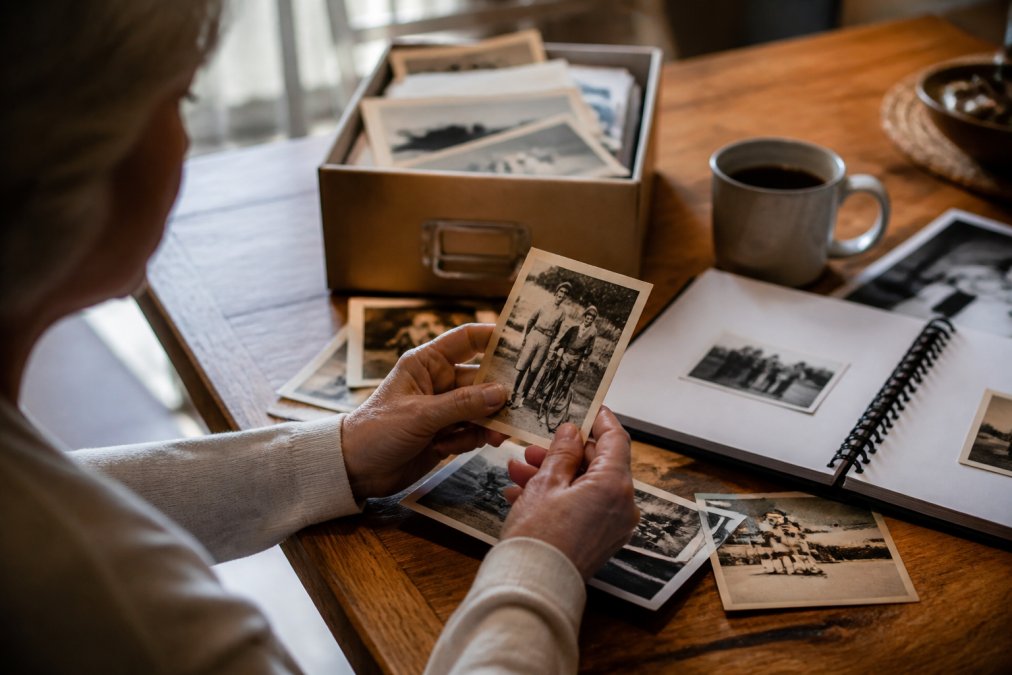
Physical objects carry meaning that digital files sometimes miss. A handwritten letter, a family recipe card, a photograph, a piece of jewelry, these tangible items connect us to people and moments in ways that copies alone cannot fully capture.
Digitizing Physical Photos and Albums
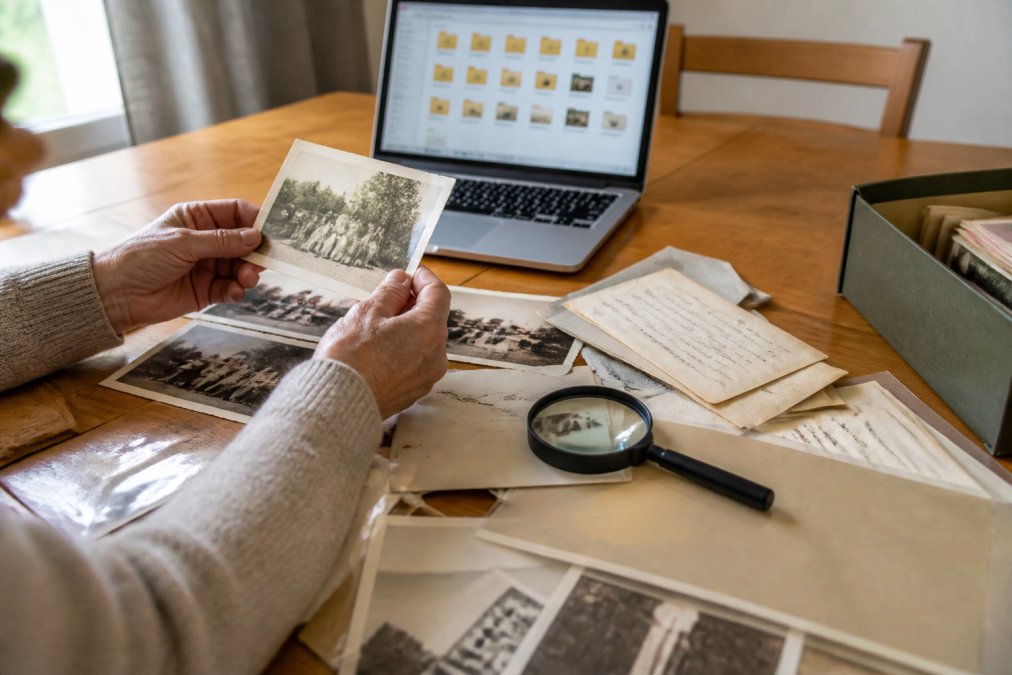
Start by assessing what you have. Gather all physical photos, loose photos, albums, slides, negatives, printed newspaper clippings. Sort them into groups by decade or family member.
For loose photos and documents, a flatbed scanner works well. You can also use smartphone apps like Google PhotoScan, which reduce glare and distortion from photographing paper documents.
For old slides and negatives, consider sending them to a professional scanning service if you have many. Your local library or historical society may offer scanning services at low cost.
As you digitize, create a consistent naming system. Include the date, the people in the photo, and the location if you know it. A photo named "1985_Smith_Family_Reunion_Lake_House.jpg" is far more useful than "Photo_001.jpg" when searching for a specific memory.
Create multiple backup copies. Store one set on your computer, another on an external hard drive, and a third in cloud storage.
Organizing and Cataloging Your Family Archive
Organization is the difference between a collection of files and an actual family archive. Without structure, even well-preserved files become difficult to access and share.
Decide on a folder structure before you start. Create main folders by decade or family member, then subfolders by type (photos, documents, recordings, videos).
Create a master index or spreadsheet that lists what you have. Include the filename, date, people involved, and a brief description. This metadata layer transforms a collection into an archive that's actually searchable.
Consider adding context notes. A photo of your grandmother as a young woman is interesting. A photo with a note explaining that she was working as a nurse during World War II and this was taken on her first day at the hospital, that's a story.
Digital Asset Management and Cloud Storage Security
Once your family stories are digitized, protecting them becomes crucial. Digital files are vulnerable to loss, theft, and degradation in ways that physical objects are not.
Use cloud storage that offers strong encryption and access controls. Services like Google Drive, Dropbox, and OneDrive all encrypt files in transit and at rest. Enable two-factor authentication to prevent unauthorized access.
Create a shared folder structure that allows family members to access the archive without giving them permission to delete or modify files. Most cloud services let you set granular permissions.
For sensitive documents, financial records, medical information, passwords, or family stories involving trauma, consider using a password-protected folder or separate storage location.
Document your storage strategy. Write down where your files are stored, how to access them, and what passwords or permissions are needed. Leave this information with your will or in a secure location your executor can access.
Creating a Legacy Planning Guide for Your Family
A legacy planning guide goes beyond stories. It's a document that explains your wishes, your values, and the practical information your family will need when you're gone.
Your guide should address questions your family might have but feel awkward asking. Where are your important documents? What are your wishes for your funeral or memorial? What values matter most to you? What do you want people to know about your life that might not be obvious from official records?
Structure your guide chronologically or by topic, whatever makes sense for your life. Some people organize by decade. Others organize by theme: childhood, education, career, relationships, spiritual journey, lessons learned.
Include practical information alongside stories. Where are your financial accounts? Who should be contacted in an emergency? What are your preferences for medical care?
Be honest about difficult topics. If your family has experienced addiction, mental health struggles, or conflict, acknowledging these realities prevents future generations from being blindsided by information they discover later. Frame these topics with compassion, explaining not just what happened, but how you've made peace with it or what you learned from it.
My Living Legacy Course is designed to guide you through this process systematically. The 420+ reflective prompts walk you through the major areas of your life and your wishes, helping you create a comprehensive guide that's both personal and practical.
Preserving family stories is one of the most meaningful things you can do for your loved ones. My Living Legacy Course provides the structure and guidance you need to move from intention to completion. With seven comprehensive modules and 420+ reflective prompts, the course walks you through every aspect of documenting your life story, wishes, and final arrangements, creating a legacy that truly informs and comforts those you cherish. Start preserving your family's narrative today with a resource designed specifically for your needs.
Frequently Asked Questions
How do I start interviewing elderly relatives about their life stories?
Begin by choosing a quiet, comfortable setting where your relative feels relaxed. Prepare open-ended questions about their childhood, major life events, and family traditions. Start with easier topics before moving to sensitive subjects. Use a recording app on your phone or a digital recorder to capture their voice. Let them speak naturally without interrupting, and ask follow-up questions to encourage deeper storytelling. Even 30 minutes of recorded oral history creates valuable documentation for future generations.
What are the best digital tools for family storytelling and preservation?
Several options exist depending on your comfort level and budget. Cloud storage services like Google Drive or Dropbox securely store digitized photos and documents. Recording apps like Voice Memos or Otter.ai capture and transcribe interviews. Family tree software helps organize genealogy and ancestry information. Multimedia platforms allow you to combine photos, videos, and written narratives. Consider your technical skill level and choose tools that feel manageable. Many families benefit from starting simple, a phone recording and cloud backup, then expanding as needed.
How do I organize thousands of old family photos and documents?
Create a system using chronological order and family groupings. Sort photos by decade or life event, then by family member or branch. Use consistent naming conventions like 'LastName_FirstName_Year_Event.jpg' for digital files. Add metadata tags to photos noting who appears in them, locations, and dates. Store originals in acid-free boxes in a cool, dry place. Digitize fragile or valuable items, and maintain backup copies in cloud storage. Consider creating a family cookbook or memory book that incorporates selected photos with stories, making the archive more engaging for younger generations.
What should I include in a legacy planning guide for my family?
A comprehensive legacy planning guide complements your will by addressing the personal side of your life. Include your life story, important values, and family traditions. Document final wishes about celebrations, charitable giving, or memorial preferences. List practical information like account locations and trusted contacts. Share family recipes, heirlooms' histories, and stories behind important artifacts. Address accessibility by using clear language and organizing information logically. This guide becomes an intergenerational resource that helps your family understand your wishes and preserve your narrative long after legal documents are filed away.