 ultimate-guide
Is Legacy Planning Worth It? A Practical 2026 Guide
Table of Contents
- What Makes Legacy Planning Worth the Investment
- Estate Planning vs Legacy Planning: Understanding the Difference
- Benefits of Legacy Planning for Heirs and Your Peace of Mind
- Common Legacy Planning Mistakes That Cost Families
- Your Legacy Planning Checklist: Getting Started
- Digital Assets and Modern Legacy Considerations
- Is Professional Help Worth the Cost?
- Conclusion: Making Your Decision
- Frequently Asked Questions
Last Updated: August 14, 2026
What Makes Legacy Planning Worth the Investment
Is legacy planning worth it? The answer depends on what you're trying to accomplish and how much clarity you want to leave behind for your family.
Legacy planning goes beyond a standard will. While a will addresses the legal distribution of your assets, legacy planning encompasses your personal stories, values, wishes for final arrangements, and the non-financial guidance your loved ones actually need when you're gone. Many families discover that after a parent passes, they're left with unanswered questions: What did Mom really want? How did Dad expect us to handle family disagreements?
This gap between legal documents and personal clarity is where legacy planning creates real value. It's the difference between your family having a checklist of what to do and actually understanding why you made certain choices and what matters most to you. The investment in legacy planning is emotional and logistical, you're reflecting on your life, relationships, and values. For many people, that reflection itself becomes the most meaningful part. Families who engage in structured legacy planning report feeling more connected to their parents' wishes and less overwhelmed when difficult decisions arise.
Estate Planning vs Legacy Planning: Understanding the Difference
Estate planning is the legal framework for distributing your assets and managing your affairs. Legacy planning is the emotional and narrative framework for passing down your values, stories, and wishes.
An estate plan typically includes a will, possibly trusts, power of attorney documents, and healthcare directives. These documents tell your executor and family what to do with your money and property. Legacy planning complements estate planning by answering the "why" questions. It addresses what you want your family to know about you, how you want to be remembered, what principles guided your life, and how you'd like certain non-legal matters handled.
Many people assume they're the same thing. They're not. You can have a comprehensive estate plan and still leave your family confused about your personal wishes. The distinction matters because each serves a different purpose. Estate planning protects your wealth and ensures legal compliance. Legacy planning ensures your family understands who you were and what mattered to you. The most prepared families have both.
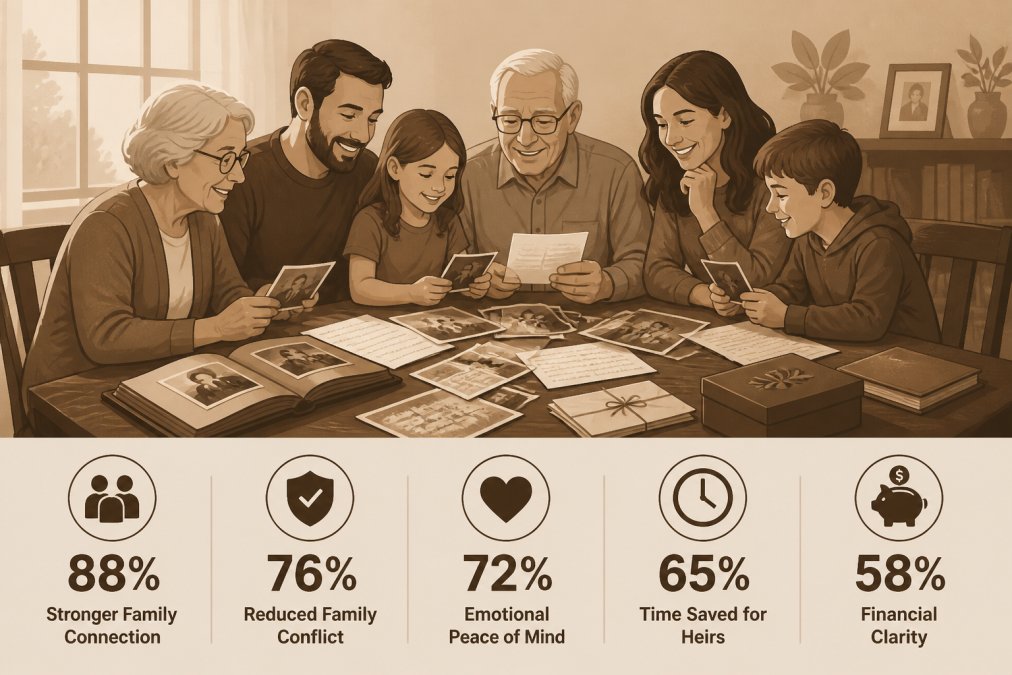
Benefits of Legacy Planning for Heirs and Your Peace of Mind
When you complete legacy planning, your children and grandchildren inherit something more valuable than a list of account numbers: they inherit clarity.
Heirs benefit from knowing your intentions before they're forced to make decisions under stress. A legacy document removes guesswork and tells them exactly how you wanted your funeral handled, which family heirlooms go to whom, and how you'd like them to approach major decisions if they disagree. Beyond logistics, heirs gain emotional connection. They learn your story in your own words and understand why you made certain choices.
For you, the benefits are equally real. The process of legacy planning forces you to articulate what actually matters. Many people report that reflecting on their life and writing down their values is profoundly clarifying. You also gain peace of mind knowing your family won't be fighting over your intentions and your stories won't be lost. Grandchildren who read their grandparent's legacy document often feel a deeper connection to family history, and the intergenerational wealth transfer becomes less about money and more about values and wisdom.
Common Legacy Planning Mistakes That Cost Families
The most expensive legacy planning mistake is doing nothing. Families without documented wishes, stories, or guidance face chaos, argue about what the deceased would have wanted, and lose irreplaceable stories.
The second major mistake is creating a legacy document but not sharing it with your family. A beautiful legacy letter locked in a safe deposit box provides zero value. Your family needs to know it exists, where it's stored, and how to access it.
A third mistake is confusing legacy planning with estate planning and stopping at a will. Your will doesn't tell your children how you want them to handle family disagreements or what your life story was. Another common error is being too vague. Writing "I want my family to be happy" doesn't provide guidance. Effective legacy planning is specific and addresses actual decisions your family might face.
Many people also underestimate how much information their family actually needs. They assume their kids know where important documents are or how to access digital accounts. A comprehensive legacy plan includes practical information: passwords or access instructions for digital assets, contact information for your financial advisor and attorney, and details about your insurance policies.
Finally, some people delay legacy planning until it's too late. Legacy planning done now is infinitely more valuable than legacy planning you plan to do someday.
Your Legacy Planning Checklist: Getting Started
Starting legacy planning doesn't require hiring an attorney or spending thousands of dollars. You can begin with reflection and organization.
Step 1: Gather Your Information. Collect documents and details you'll need: birth certificate, marriage certificate, property deeds, insurance policies, bank account information, investment statements, and contact information for your financial advisor, attorney, and accountant. Organize this information in one place.
Step 2: Document Your Life Story. Write down the key chapters of your life. Where were you born? What experiences shaped who you became? What accomplishments are you proud of? Even a few paragraphs per major life phase is valuable.
Step 3: Articulate Your Values. What principles guided your decisions? What do you want your family to know about how you approached money, relationships, work, or adversity? What lessons did you learn the hard way?
Step 4: Address Practical Matters. Document your wishes for your funeral or memorial service. List who should be notified when you pass. Specify how you want your digital accounts handled. Explain any non-standard arrangements.
Step 5: Create Your Legacy Document. Compile your information into a format your family can access. This might be a handwritten letter, a typed document, a video recording, or a structured course like My Living Legacy Course that guides you through 420 reflective prompts across seven modules.

Step 6: Share Your Plan. Tell your family that you've completed legacy planning. Show them where the document is stored. Discuss your wishes with them while you're able to have the conversation.
Step 7: Update Regularly. Review your legacy plan every few years and update it as needed.
Digital Assets and Modern Legacy Considerations
Most people now have digital assets that didn't exist a generation ago: email accounts, social media profiles, photo libraries stored in the cloud, cryptocurrency, online banking, and digital files with sentimental or financial value.
Your family likely doesn't know how to access these. Create a list of your digital accounts, including usernames, passwords (or instructions for how to access them securely), and what you want done with each account. Some people want their social media memorialized. Others want it deleted. Some have digital photos that need to be preserved for the family.
You should also consider how to pass down digital memories. Video messages, recorded stories, or digital photo albums can be more meaningful than written documents. Modern legacy planning also addresses non-traditional family structures. If you're in a blended family, a same-sex partnership, or have complex custody arrangements, your legacy planning needs to address these explicitly.
Finally, consider the digital footprint you want to leave. What do you want to be searchable about you online? What information should be private?
Is Professional Help Worth the Cost?
You can create a basic legacy plan yourself by writing down your stories, organizing your information, and documenting your wishes without hiring anyone.
However, professional help becomes worthwhile in specific situations. If your estate is complex, if you have significant assets, multiple properties, business interests, or complicated family dynamics, professional guidance ensures your legacy planning aligns with your estate plan. An attorney or financial advisor can identify gaps you might miss.
For many people, the middle ground works best: complete basic legacy planning yourself, then have an attorney review it to ensure it's sound. A structured legacy planning course like My Living Legacy Course offers guided reflection. The seven modules and 420 prompts walk you through the thinking process, ensuring you've considered everything important. The decision comes down to your comfort level and your situation.
Conclusion: Making Your Decision
Is legacy planning worth it? For most people, yes. It's worth it because of the combination of benefits: the peace of mind that comes from knowing your family will understand your wishes, the clarity you gain from reflecting on your life, the memories you preserve, and the reduced conflict your family will face.
The real cost of not doing legacy planning is invisible until you're gone. Your family will face confusion, conflict, and loss of irreplaceable stories. Legacy planning doesn't have to be expensive or complicated. It starts with reflection and organization.
My Living Legacy Course provides a structured path through this process. With seven comprehensive modules and over 420 reflective prompts, it guides you through organizing your story, wishes, and final arrangements at your own pace. You get lifetime access, ensuring your family can return to your legacy document whenever they need it. Get started with My Living Legacy Course and create the clarity your family deserves.
Frequently Asked Questions
How does legacy planning differ from traditional estate planning?
Estate planning focuses on the legal distribution of your assets through documents like wills and trusts, handled by attorneys and governed by probate law. Legacy planning goes deeper, it captures your personal stories, values, final wishes, and the reasons behind your decisions. While a will tells your heirs what they're receiving, legacy planning explains why it matters and who you are. Both serve different but complementary purposes: estate planning protects your assets, while legacy planning protects your family's emotional and relational wellbeing.
What are the main benefits of legacy planning for heirs?
Heirs benefit from clarity, reduced conflict, and emotional support during grief. When you document your wishes and values, your family doesn't have to guess your intentions or argue about what you would have wanted. Legacy planning also preserves your stories and wisdom for future generations, grandchildren and great-grandchildren who never met you can still know who you were. Additionally, understanding your values helps heirs make decisions aligned with your principles, whether about charitable giving, asset use, or family traditions. Families who complete legacy planning report less stress during probate and stronger relationships afterward.
What common legacy planning mistakes should I avoid?
The biggest mistake is waiting too long or never starting at all. Many people delay because the topic feels heavy, then illness or crisis forces rushed, incomplete decisions. Another common error is assuming your will covers everything, it doesn't address your personal stories, ethical wishes, or digital assets. Some people create legacy documents but never share them with their family, defeating the purpose. Others fail to update their legacy plan as circumstances change: new grandchildren, relationship shifts, or revised values. Finally, some neglect digital assets entirely, passwords, social media accounts, photos, and online banking access that your heirs will need to manage.
Is legacy planning worth it if my family doesn't seem interested?
Yes. Many adult children resist the conversation initially because it feels morbid or uncomfortable, but most report profound gratitude once they receive the legacy documents. The act of creating your legacy also benefits you, it provides clarity on your own values and priorities, reduces anxiety about the future, and gives you control over your narrative. You're not forcing your family to read 420 prompts; you're creating a resource they can access at their own pace, especially during grief when they're most likely to seek answers about who you were and what mattered to you. Starting the conversation gently, perhaps by sharing one meaningful story or wish, often opens the door.
Making your decision about legacy planning worth it comes down to one question: Do you want your family to understand your wishes and preserve your story, or are you comfortable leaving them to figure it out on their own? Most people, when they think about it directly, realize the answer is clear. The investment in legacy planning, whether through self-guided reflection or structured support, pays dividends in family harmony and peace of mind that extend far beyond your lifetime.