 Comparison
Willow vs Bamboo Caskets: Choosing a Biodegradable Material
Last Updated: November 14, 2026
Quick Summary
Choosing a biodegradable casket means matching the material to your priorities: woven plant fibers like willow and bamboo, untreated wood, and paper-based boards each break down at different speeds and cost different amounts. Compare decomposition speed, durability, handling weight, and cost, then confirm the cemetery accepts your choice before you buy.
- Woven plant fibers are mostly cellulose and lignin bound by weaving rather than glue.
- Cardboard and paper caskets break down fastest and typically cost $50 to $500.
- Untreated wood holds its shape through transport and viewing, while wicker is lighter but flexes more.
- Green cemeteries generally expect containers free of metal hardware, varnish, and chemical finishes.
- Ask your funeral provider to confirm in writing that the casket meets the cemetery's requirements.
Table of Contents
- Comparing Biodegradable Casket Materials Side by Side
- Types of Eco-Friendly Caskets and How They Break Down
- Wood Casket vs. Wicker Casket: Durability, Handling, and Feel
- A Step-by-Step Checklist for Choosing Your Material
- Recording Your Casket Choice in Your Legacy Plan
- Frequently Asked Questions
Comparing Biodegradable Casket Materials Side by Side
Choosing a biodegradable casket material comes down to a few practical questions: how fast it breaks down, how it handles, and what it costs. This guide compares common options so you can weigh them against your own priorities.
Comparing biodegradable casket materials is easier when each one is judged on the same criteria. The criteria below are decomposition speed, structural durability, handling weight, and typical cost range.
How We Compared Each Material
Each material was assessed against four fixed criteria so no option gets an unfair advantage.
- Decomposition speed: how quickly the material breaks down once buried
- Durability: how well it holds shape during transport and viewing
- Handling: weight and grip for pallbearers and funeral staff
A common mistake is judging woven caskets by appearance alone. In practice, a lighter casket changes how many people are needed to carry it.
Types of Eco-Friendly Caskets and How They Break Down
Types of eco-friendly caskets fall into three families: woven plant fibers, untreated wood, and paper-based boards. Each family breaks down through a different mechanism, and each carries a different sourcing and manufacturing footprint, a distinction most material lists skip.
Biodegradation is the process by which microorganisms break a material down into natural compounds (the EPA). In burial conditions, that process depends on the ground itself, but the material determines what the microorganisms have to work with: cellulose, lignin, starch, or some combination.
What Each Material Family Is Made Of and How It Breaks Down
- Woven plant fibers (willow, bamboo, seagrass, rattan, banana leaf): These are mostly cellulose and lignin bound by weaving rather than glue. Microorganisms attack the cellulose first, so a loosely woven, thin-walled casket exposes more surface area and breaks down faster than a tightly woven, thick-walled one. Many woven caskets use no adhesive at all; where glue is used, its type matters as much as the fiber.
- Untreated wood (pine, poplar, cedar): Wood is lignin-rich, and lignin resists microbial attack longer than cellulose. That is why solid wood generally breaks down more slowly than woven fiber or paper. Pine, being softer and less dense, breaks down faster than dense hardwoods. Cedar's natural oils slow moisture uptake and, by extension, decay.
- Paper-based boards (cardboard, paper, fiberboard): These are processed cellulose, often with starch or other binders. They have the most surface area and the least lignin, so they break down fastest, and soften fastest if they get damp before burial.
Sourcing and Lifecycle Impact: Not All Plant-Based Materials Are Equal
A plant-based casket is not automatically a low-impact casket. The lifecycle picture depends on four things:
- Renewable sourcing. Willow and bamboo regrow quickly from coppiced or fast-growing stands; slow-grown hardwoods do not. Ask whether the fiber is sourced from managed or certified forests rather than cleared land.
- Transport distance. A casket woven overseas and shipped has a very different footprint from one made regionally. Distance is often the largest single variable families can actually control.
- Adhesives and binders. Glues, resins, and starch binders can contain synthetic compounds that do not break down cleanly. A woven casket held together with a synthetic adhesive is not equivalent to one tied or woven without glue.
- Coatings and finishes. Varnish, paint, and stain are the most common disqualifiers for green burial and the most common hidden lifecycle cost. Untreated means untreated, including the inside.
A common pattern is that families compare materials on appearance and price while ignoring adhesives and transport, which are often the difference between a genuinely low-impact choice and a green-looking one.
What Biodegradation Means in Different Burial Conditions
Decomposition is not uniform. A woven willow casket in loose, moist, aerated soil will break down faster than the same casket in dense clay. Dry, compacted ground slows the process for every material.
This is the part most comparisons skip. The material matters, but the soil and the cemetery's practices matter just as much. Avoid any promise of a specific timeline; responsible sources describe relative speed, not guaranteed dates.
Wood Casket vs. Wicker Casket: Durability, Handling, and Feel
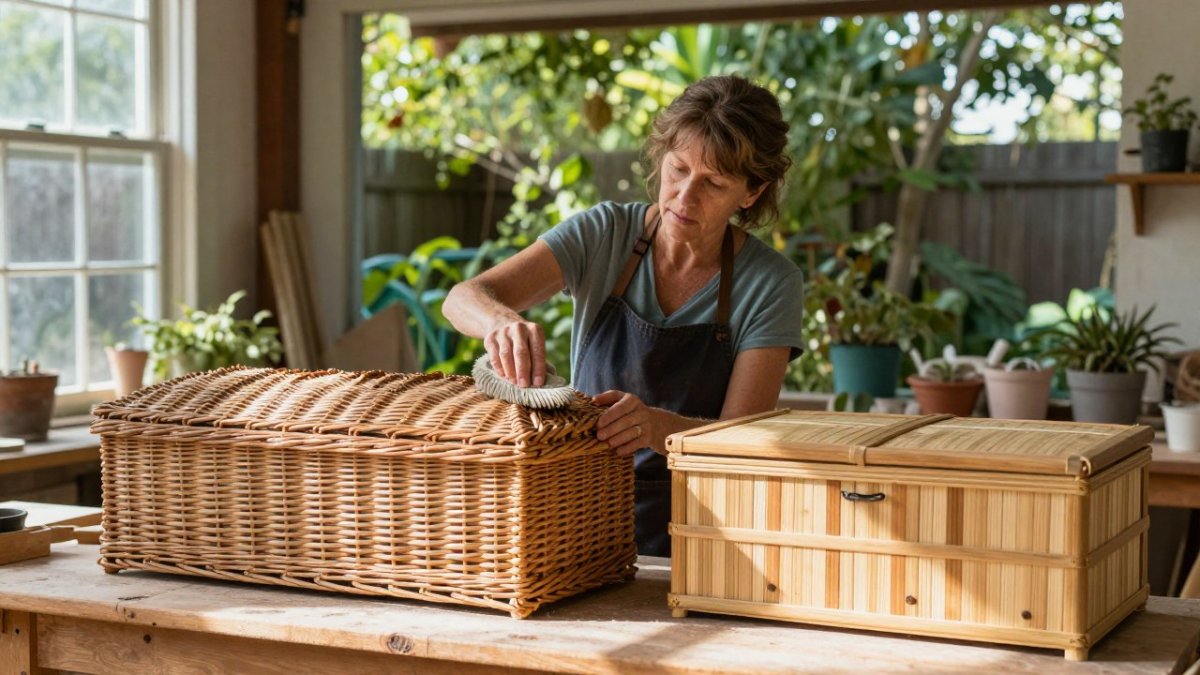
A wood casket wins on rigidity and a wicker casket wins on weight. Untreated wood holds its shape through transport and viewing; woven wicker is lighter and easier to lift but flexes more under load.
A Step-by-Step Checklist for Choosing Your Material
Work through this checklist in order. It moves from values to practical verification so nothing gets missed.
- Decide your priority: cost, environmental impact, or appearance
- Confirm the cemetery accepts the material you're considering
- Check for metal hardware, varnish, or chemical finishes
If you're still weighing broader options, our article on alternatives to traditional funeral planning covers the wider landscape. For a fuller planning view, see this end-of-life planning checklist for seniors.
Recording Your Casket Choice in Your Legacy Plan
Write your casket choice down where your family can find it. A verbal preference is easy to forget under stress; a written record prevents confusion and last-minute upselling.
Record the material, the provider, the cemetery's requirements, and the reason behind your choice. Our guide on writing final wishes for family walks through the format, and this piece on what to include in a non-legal will document covers the details that matter most.
My Living Legacy Course is a guided online program with seven modules and over 420 reflective prompts, designed to help you capture your final arrangements alongside your life story, so your family receives clarity beyond legal documents. It offers lifetime access for a one-time fee. As you record the choices that will bring your plans and values together, Life Heals Medical Supplies can also prompt reflection on how burial urn materials, from marble to wood, fit the legacy you wish to leave.
Choosing a biodegradable casket material is one decision inside a larger act of care. The material you pick matters less than whether your family knows what you wanted and why.
My Living Legacy Course exists to make that clarity possible.
Frequently Asked Questions
What materials are biodegradable caskets made from?
Most biodegradable caskets use plant-based or renewable materials: untreated pine, poplar, or cedar; woven willow, bamboo, seagrass, rattan, or banana leaf; recycled cardboard and paper fiberboard; and sometimes cotton or wool felt. The key is that the container breaks down naturally without metal hardware, varnish, or chemical finishes. When comparing options, ask the seller for the full material list and confirm no lacquer, glue, or metal fittings are hidden in the construction.
How much does a biodegradable casket cost?
Biodegradable casket cost varies widely by material. Pricing varies widely by material, size, finish, and provider, so request written quotes before deciding. Untreated wood and woven willow or bamboo usually sit in the middle. Prices depend on size, finish, lining, and whether you buy from a funeral home or a direct provider, so request written quotes before deciding.
Are wicker caskets biodegradable?
Yes, when they are made from natural woven fibers such as willow, bamboo, or seagrass without chemical treatment. A wicker casket woven from untreated plant fibers breaks down naturally in the ground. Check for hidden metal staples, synthetic linings, or varnish, because those slow decomposition and can disqualify the casket at a green burial cemetery. Ask the maker to confirm the weave is natural and the finish is water-based or absent.
Can you use a biodegradable casket for a natural burial?
Most green burial grounds accept biodegradable caskets, but each cemetery sets its own rules. Common requirements include no metal, no concrete vault, no chemical embalming, and a container that breaks down naturally. Before you buy, ask the cemetery for its written container policy and whether it follows Green Burial Council standards. Confirm the casket's material and hardware meet those rules so your family is not turned away at the graveside.
What should you look for when comparing biodegradable caskets?
Compare four things: material and how quickly it breaks down, construction quality and weight for handling, cost with all fees included, and cemetery acceptance. Ask whether the casket uses untreated wood or natural woven fibers, whether any metal or varnish is present, and what the cemetery requires. Also check the weight and handles, since woven and cardboard caskets can be harder to carry. Write your choice and the reasons into your final wishes so your family is not guessing.