 How-to
8 Steps to Creating a Family Memoir for Grandchildren
Last Updated: November 16, 2026
Quick Summary
To create a family memoir for grandchildren, pick 10 to 15 stories that capture who you are, organize them by life stages, and write each one in your own voice as a short scene a grandchild can picture. Record yourself telling the stories first, then type them up, and finish by choosing a format such as a print-on-demand book or a digital PDF.
- Write for the grandchild, not for history, so the memoir reads like you talking across the kitchen table.
- Ask questions that request a scene rather than a fact to open real memories.
- Keep one or two sensory details per scene and cut any sentence you stumble over when reading aloud.
- A hybrid of a printed book plus a digital PDF with audio recordings and photo scans often works well.
- Write about painful stories honestly but kindly, and do not let one hard story swallow the book.
Table of Contents
- Why a Family Memoir Matters More Than Any Heirloom
- Choosing the Stories and Life Stages to Include
- Family History Interview Questions That Open Real Memories
- How to Record Your Life Story in Your Own Voice
- How to Record Stories for Grandchildren They Will Actually Read
- Family Memoir Examples: What Good Looks Like
- Handling Difficult, Conflicting, or Painful Family Stories
- Start Your Memoir With a Guided Course
- Frequently Asked Questions
Why a Family Memoir Matters More Than Any Heirloom
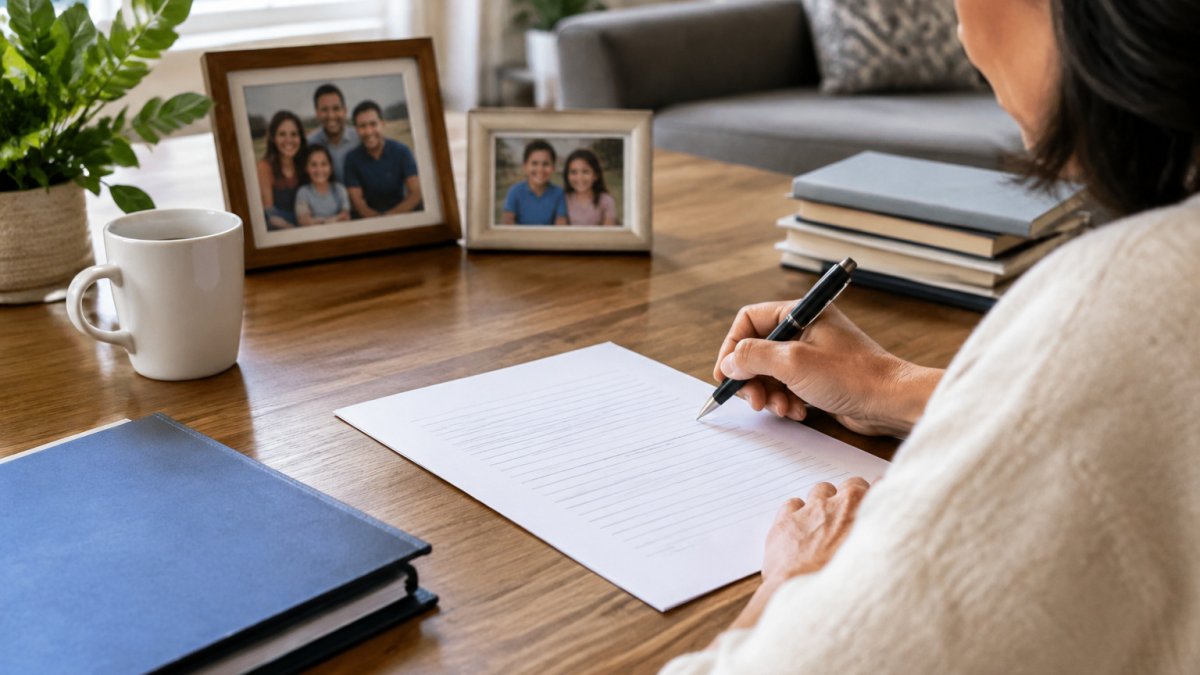
A family memoir is a written record of your life story that passes your memories, values, and voice to the people you love.
Think about what sits in your attic right now. A watch. A ring. A china cabinet. Your grandchildren might keep them. They might sell them.
A memoir works differently. It carries the sound of your laugh and the reason you left your hometown. It holds the story of how you met their grandfather.
The work is simpler than it sounds.
One rule shapes everything: write for the grandchild, not for history. A record that feels like a museum plaque gets skimmed.
Choosing the Stories and Life Stages to Include
Start with a short list, not a long one. Pick 10 to 15 stories that capture who you are, then let the rest go. A tight memoir gets finished; a sprawling one stalls.
Organize by life stages so the book moves forward in time:
- Childhood: your first home, a parent's rule you still quote, a childhood fear
- Young adulthood: first job, first love, a decision that changed your path
- Building years: marriage, children, moves, money struggles, small wins
- Later years: what you learned, what you would do differently
Then look for themes that run through all of them. Maybe your stories are about hard work. Maybe they are about leaving home and coming back. Naming the theme helps you cut stories that do not fit.
A common mistake is trying to include everything. Ask one question instead: which memories would your grandchildren be sad to lose? Start there.
Family History Interview Questions That Open Real Memories
The best answers come from questions that ask for a scene, not a fact. "Where were you born" gets a city. "What did your street sound like at night" gets a story.
Here are prompts we recommend, grouped by what they unlock:
Childhood memories
- What was your favorite meal as a child, and who made it?
- What did you get in trouble for most often?
- Who was your first best friend, and what did you do together?
Family relationships
- What did your parents argue about, and how did it end?
- Which relative did you feel closest to, and why?
- What tradition did your family keep that you would not repeat?
Turning points
- What was the hardest year of your life, and what got you through it?
- What choice did you almost make differently?
- When did you first feel like an adult?
Record the answers in your own words. If you are gathering stories from relatives, learn how to interview family members for a memoir before you sit down with them, so the conversation goes deeper than names and dates.
How to Record Your Life Story in Your Own Voice
Your voice is the whole point. A memoir written in stiff, formal prose loses the person behind it, and grandchildren can tell.

Write the way you talk. If you say "well" and "anyway" and "you know," keep some of it. Read each page aloud. If a sentence sounds like a letter from a bank, rewrite it until it sounds like you.
Three habits make this easier:
- Talk first, write second. Record yourself telling the story out loud, then type it up.
- Use plain words. "I was scared" beats "I experienced considerable apprehension."
- Keep the rough edges. The wrong turn, the burnt dinner, the joke that fell flat. Those are the parts people remember.
If you want help finding and holding that voice across a whole book, finding your voice in memoir writing covers it in more depth.
How to Record Stories for Grandchildren They Will Actually Read
Grandchildren read short, visual, and personal. Write each story as a scene they can picture, and keep it brief.
Edit for the age you are writing for. A story for a young child works best with one scene and one feeling, kept short.
Balance detail with readability. One or two sensory details per scene are enough, the smell of the coal stove, the sound of the screen door. A page of description slows a young reader down. Read each draft aloud and cut any sentence you stumble over; that stumble is usually a signal that the sentence is doing more work than the story needs.
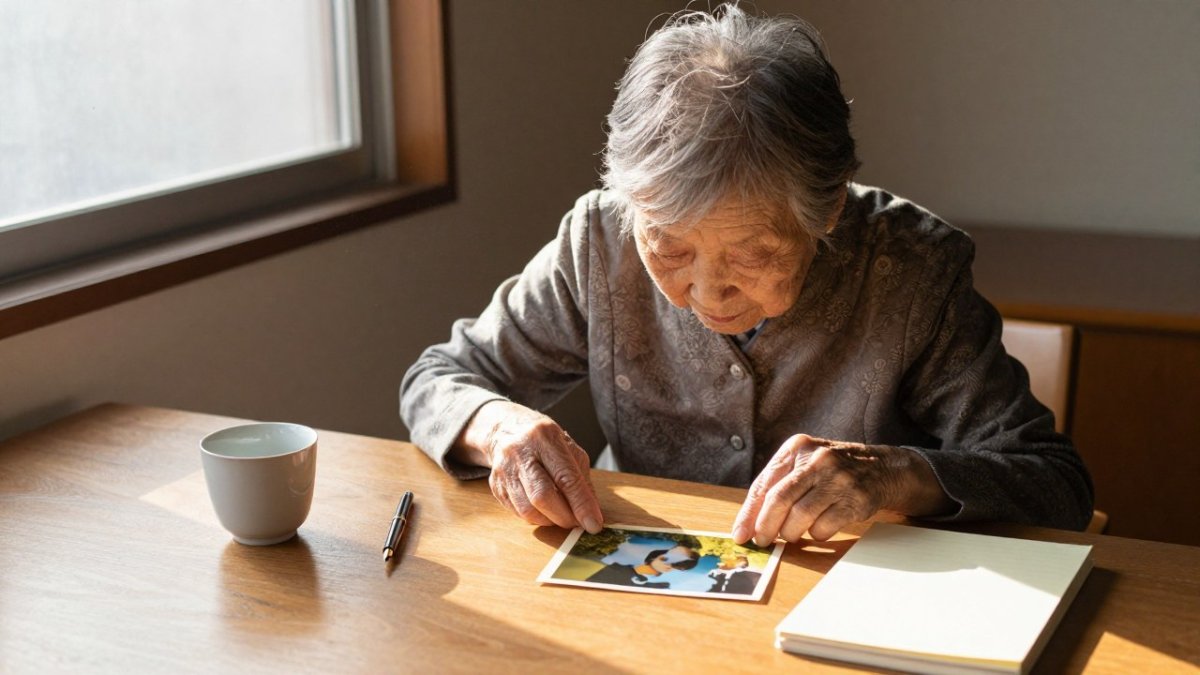
Add materials that anchor the story. Photographs with captions that name people and say what was happening.
Choose a production format and budget for it. Three formats cover most family memoirs:
- Handwritten or typed loose pages in a binder. A low-cost option that works well for a work-in-progress you plan to add to.
- Print-on-demand softcover or hardcover. A common choice for a finished keepsake. Pricing depends on page count, color, binding, quantity, and shipping, so check current rates with your printer.
- Digital-only PDF or shared folder. Easy to update and inexpensive to share. Pair it with a printed copy for grandparents or relatives who do not use screens.
Watch out: do not write down to them. The language should still sound like you, plain, specific, and honest, not like a children's textbook.
Three formats cover most family memoirs, each suited to a different budget and purpose.
| Format | Best for | Key difference |
|---|---|---|
| Handwritten or typed loose pages in a binder | Work-in-progress you plan to add to | Low-cost option |
| Print-on-demand softcover or hardcover | A finished keepsake | Pricing depends on page count, color, binding, quantity, shipping |
| Digital-only PDF or shared folder | Easy, inexpensive sharing | Easy to update; pair with a printed copy |
Family Memoir Examples: What Good Looks Like
Good family memoir examples share one trait: they show a person, not a timeline. The dates are there, but the story leads.
Look at the difference.
The second version uses a concrete sensory detail and places a person inside a moment.
Three structural models are worth studying, and you can borrow from each without copying anyone's life:
- The single-theme memoir. The whole book orbits one subject, such as a family business, a migration, or one difficult relationship. The theme acts as a spine, so every story either supports it or gets cut. This is the easiest model to finish because the editing rule is simple.
- The life-stage memoir. Stories move in chronological order through childhood, young adulthood, building years, and later years. This is the model most grandparents default to, and it works well when you want a complete arc for grandchildren who never knew you young.
- The object-and-recipe memoir. Each short chapter starts with a photograph, a recipe card, a tool, or a ticket stub, then tells the story behind it. This model suits grandchildren who read in short bursts and gives you a natural page structure: image on one side, 400 to 800 words on the other.
Published memoirs you can study for voice and structure include Frank McCourt's Angela's Ashes, Maya Angelou's I Know Why the Caged Bird Sings, and Tara Westover's Educated.
A practical exercise: take one story you have already drafted and rewrite the first sentence three ways, once starting with a date, once starting with dialogue, and once starting in the middle of an action. Read all three aloud. Most writers find the action opening pulls a grandchild in fastest, while the dialogue opening works best for stories built around a single conversation. Once you have found the opening that brings a story to life, you can carry that same moment into a keepsake by choosing to start a family keepsake journal.
Watch out: do not imitate a published memoir's tone so closely that your own voice disappears. Grandchildren want your phrasing, not a polished impression of a famous author.
If you want a wider view of how families preserve stories across generations, how to preserve family stories offers a complete guide you can compare your draft against.
Handling Difficult, Conflicting, or Painful Family Stories
Not every story is warm, and you do not have to pretend otherwise. You do get to choose how much detail to share and with whom.
Some questions to ask yourself before you write a hard story:
- Does telling this help my grandchildren understand the family, or does it only settle an old score?
- Who else is in this story, and would they be hurt by it?
- Can I tell the truth without naming names or reopening wounds?
You can write about a painful year without listing every offense. You can say "my father and I did not speak for a long time, and I never fully understood why" and leave it there. That is honest. It is also kind.
Watch out: do not let one hard story swallow the book. Balance it with the ordinary good years. Grandchildren need the whole person, not just the wound.
Start Your Memoir With a Guided Course
The hardest part of creating a family memoir for grandchildren is finishing it. A guided course gives you structure, prompts, and a path to the end.
My Living Legacy Course is a guided online program. It offers seven modules and more than 420 reflective prompts to help you organize your life story and wishes. It is designed as a companion to your will.
If you are ready to enroll, compare the best beginner memoir courses first. And if you want to know exactly what buying a guided course involves, how to buy a guided life story course walks you through it step by step.
Your grandchildren will inherit your furniture whether you write anything or not. They will only inherit your voice if you sit down and capture it.
Frequently Asked Questions
What is the best way to record my life story?
Start with one story at a time and speak it aloud before writing anything down. A phone voice memo or a simple digital recorder captures tone and phrasing that typing loses. Record in short sessions of 15 to 20 minutes so you stay fresh. Then transcribe or have someone help you type it up. Many people find that talking first and editing later produces a more natural voice than writing from a blank page, which is why a family memoir built from recordings often reads warmer than one written cold.
How long should a family memoir be?
There is no required length. A meaningful family memoir for grandchildren can run from 20 pages to 200. What matters is coverage of the moments that shaped you: childhood, courtship, work, family traditions, and the values you want passed down. A focused 40-page book with strong stories and captions beats a padded 300-page draft no one finishes. Aim for 15 to 25 well-told stories first, then expand if the material holds up.
What should I do about painful or conflicting family stories?
Write them, but decide on your purpose before you publish. Some writers record difficult stories in a private section marked for later generations, or tell the facts without assigning blame. If living relatives are involved, consider showing them the passage before printing. You do not have to include everything, and you do not have to hide everything. A short note explaining why you chose to include or leave out a story often helps grandchildren understand the context later.
How do I organize old photos and memories for a memoir?
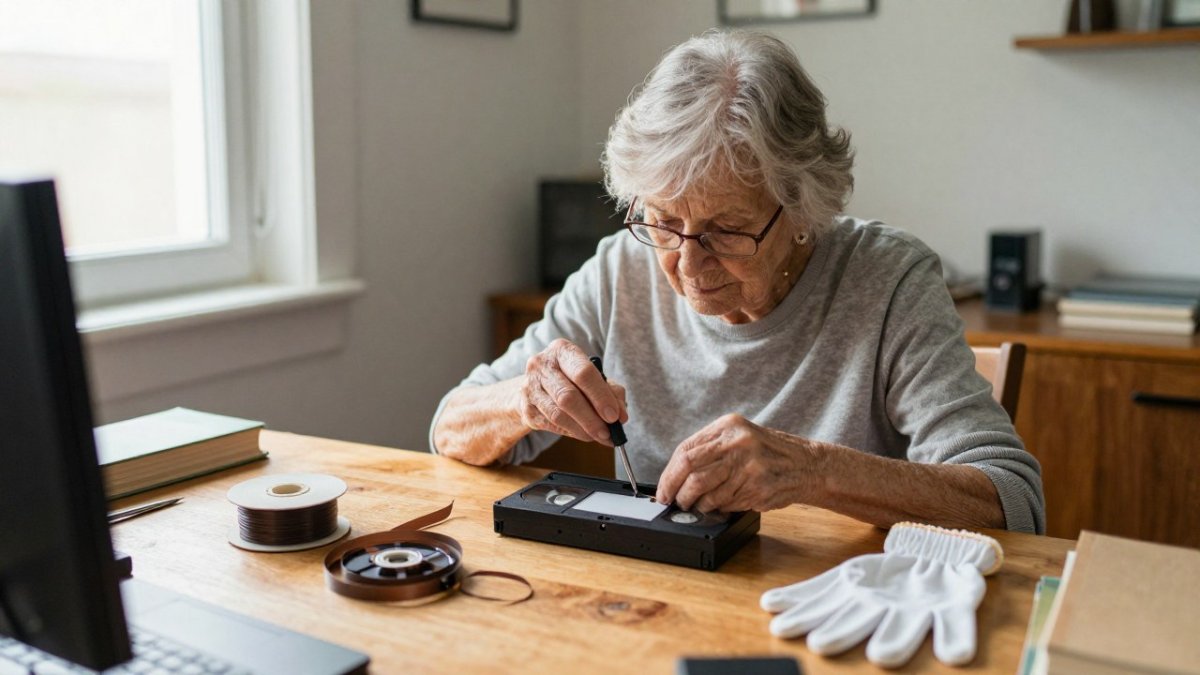
Gather photos first and sort them into life stages: childhood, school years, early work, marriage, raising children, later life. Label each with names, places, and approximate dates while you still remember, because captions are what make photos useful to grandchildren. Then match two or three photos to each written story rather than illustrating every page. Store digital scans in a labeled folder and back them up in a second location so the memoir survives a lost phone or damaged album.